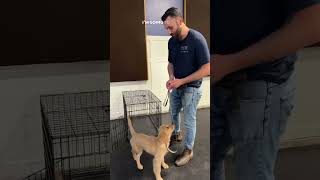
You'll teach your dog to walk on a loose lead beside you using stop-start walking, direction changes and well-timed rewards. Check the instructions for your exact model before choosing this setting or amount. All you need is a lead, a flat collar or harness and small treats, plus a quiet place to start.
YouTube video: Why Your Dog Pulls on the Lead and How to Fix It!
YouTube’s video details do not confirm captions. Check CC in the player for available tracks.
- Video length
- 8 min 2 s
- Time to do it
- 10 minutes
- Difficulty
- Easy
- Steps
- 8
What you need
Steps
Start somewhere quiet, like a hallway, garden or empty street. Fit a flat collar or harness, clip on the lead and keep treats within easy reach.
Stand still with your dog on a loose lead at your left side. Reward with a treat the moment the dog stands beside you and the lead hangs slack.
Take one or two steps forward. If the lead goes tight, stop walking and stand still. Do not pull back on the lead.
Wait for the dog to step back toward you or turn and look at you, which slackens the lead. Say yes and give a treat at your side.
Walk on again. Repeat the stop every time the lead tightens, so the dog learns that pulling gets no forward movement.
Change direction without warning when the dog forges ahead. Turn and walk the other way so the dog starts watching where you go.
Reward the dog for walking beside you every few steps. Slowly stretch the gap until you are treating every 10 to 20 seconds.
Move to a busier place only once the quiet one works well. Keep sessions to about 10 minutes and finish while the dog is still getting it right.
Tips and common mistakes
Never jerk or yank the lead, since pain and surprise make pulling worse rather than better.
Use soft treats your dog really wants, and cut them small so you can reward often without overfeeding.
Everyone in the house must stop walking when the lead goes tight, or the dog learns pulling still works for some people.
Practise for a few minutes on every walk rather than one long session, and go back to a quiet spot if the dog regresses.
Questions
How long does it take before my dog stops pulling?
Many dogs show improvement within a few short sessions, but a reliable loose lead walk usually takes several weeks of daily practice. Progress is rarely in a straight line, so expect good days and bad days.
Should I use a collar or a harness?
A flat collar or a well-fitted harness both work for loose lead training. A front-clip harness gives you a little more control with a strong puller, while a flat collar suits a dog that already walks fairly calmly.
What if my dog only pulls when it sees other dogs?
That is a separate skill, so train it at a distance where your dog can still notice you and take treats. Reward calm looking at the other dog, then slowly close the gap over several sessions.
The notes are drafted automatically from video details and general task knowledge. How the guide was prepared
Report a correction