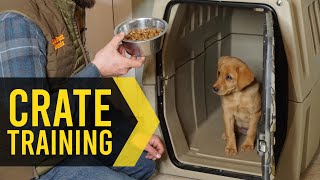
Crate training gives your puppy a safe, quiet spot and helps with house training and sleep. This guide suits new puppy owners in the first weeks at home. You need a crate sized so your puppy can stand, turn and lie down, plus treats and a few calm days.
YouTube video: How to crate train your puppy 🐶 we have a puppy training guide in our bio #dogtrainer #dogtraining
YouTube’s video details do not confirm captions. Check CC in the player for available tracks.
Other videos for this task
- How to crate train a puppy 10:13 · 8 written steps
- How to crate train a puppy 10:58 · 8 written steps
- How to crate train a puppy 9:29 · 8 written steps
- How to crate train a puppy 12:21 · 8 written steps
- Video length
- 1 min 31 s
- Time to do it
- 1 to 2 weeks
- Difficulty
- Easy
- Steps
- 7
What you need
Steps
Place the crate in a busy room where the family spends time, not in a cold corner or garage. Leave the door open so your puppy can explore it freely.
Put soft bedding and a worn T-shirt inside so the crate smells like you. Drop a treat inside and let your puppy walk in and out without pressure.
Feed meals near the crate, then inside it with the door open. This builds a good link between the crate and food.
Start closing the door for a few seconds while your puppy chews a treat. Open it before any whining starts, then slowly add seconds each session.
Stay in the room while the door is shut, then step out for a minute. Return before your puppy gets upset and let it out calmly.
Build up to short absences of 10 to 30 minutes over several days. Keep sessions short and end on a calm note.
Use the crate at night and for naps, and take your puppy out to toilet right after every wake-up. Never use the crate as punishment.
Tips and common mistakes
Puppies can hold their bladder roughly one hour per month of age, so plan toilet breaks.
If your puppy whines, wait for a pause before opening the door so crying is not rewarded.
Keep the crate small enough to feel cosy but big enough to stand and turn around.
Do not leave a young puppy crated all day; it needs play, food and toilet breaks.
Questions
How long can a puppy stay in a crate?
Use short sessions at first and build up slowly. A rough guide is one hour per month of age between toilet breaks, and puppies under six months should not be left long.
Where should the crate go?
Put it in a room where the family spends time so your puppy feels included. Avoid isolated spots like a garage or a far room.
What if my puppy hates the crate?
Go slower and pair the crate with food and toys. Never force your puppy in; let it choose to enter for treats.
The notes are drafted automatically from video details and general task knowledge. How the guide was prepared
Report a correction