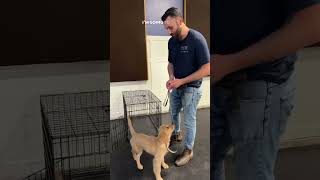
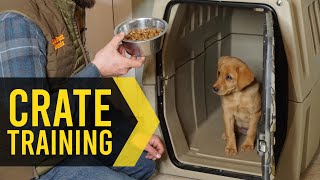
Crate training gives your puppy a safe, calm spot to rest and helps with house training. This guide suits new puppy owners who want to avoid the mistakes that make puppies fear the crate. You need a crate sized for your puppy to stand, turn and lie down, plus treats and a few days of patience.
YouTube video: How To Crate Train Your Puppy - Don't Make These Mistakes
YouTube’s video details do not confirm captions. Check CC in the player for available tracks.
- Video length
- 4 min 49 s
- Time to do it
- 7 days
- Difficulty
- Easy
- Steps
- 7
What you need
Steps
Place the crate in a busy family room where your puppy can see you. Avoid a lonely back room or a spot with heavy foot traffic right next to it.
Leave the crate door open and toss a few treats inside. Let your puppy walk in and out freely without closing the door.
Feed meals and give chew toys inside the crate so your puppy links it with good things. Keep the door open at first.
Close the door for a few seconds while your puppy is calm, then open it before any whining starts. Build up the time slowly.
Stay in the room while your puppy rests in the closed crate. Move a little further away each session, then leave the room briefly.
Take your puppy out to toilet right before crate time and again straight after. Never use the crate as punishment.
Use the crate for short naps and night sleep, and keep sessions short for young puppies. Their bladders are small, so plan toilet breaks.
Tips and common mistakes
Never force or shove your puppy into the crate, as this builds fear that is hard to undo.
Do not let your puppy out while it is whining or barking, or it learns that noise opens the door.
Skip the crate if your puppy seems panicked, and get advice from a vet or trainer.
Questions
How long can a puppy stay in a crate?
Keep sessions short at first and build up slowly. Young puppies need frequent toilet breaks, so never leave them crated for long stretches.
Should the crate be in my bedroom?
Many puppies settle better at night in a crate near your bed. Move it to a family room during the day so your puppy is not isolated.
What if my puppy cries in the crate?
Wait for a brief pause in the crying before opening the door. If your puppy seems truly panicked, stop and get help from a trainer.
The notes are drafted automatically from video details and general task knowledge. How the guide was prepared
Report a correction