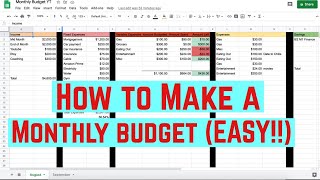
Build a simple expense tracker in Google Sheets and update it each month. You will see where your money goes and spot costs you can cut. It suits anyone who wants a basic budget without paid apps. You need a free Google account and your receipts or bank statements.
YouTube video: How to Reduce Expenses by Tracking your Monthly Expenditures
Caption availability is unknown. Check the CC control in the YouTube player.
- Video length
- 4 min 48 s
- Time to do it
- 30 minutes
- Difficulty
- Easy
- Steps
- 9
What you need
Steps
Open Google Sheets and create a new blank spreadsheet. Name it something like Monthly Expense Tracker so you can find it later.
In the first row, add column headers: Date, Category, Description, Amount and Notes. Keep the names short and clear.
List your categories in a column, such as rent, food, transport, utilities, subscriptions and fun. Add a row for each one.
Add a total row under the Amount column and type =SUM( into the cell, then select the amount cells and close the bracket.
Add a second total that sums each category, using SUMIF so every category shows its own monthly figure.
Lock the formula cells so they are not overwritten. Select them, then use Data and Protect sheets and ranges to restrict editing.
Enter each expense as a new row with the date, category, short description and amount. Do this weekly so nothing is missed.
At the end of the month, read the category totals and mark each expense as necessary or unnecessary.
Plan next month by cutting or reducing the unnecessary items and setting a target for each category.
Tips and common mistakes
Only type in the input cells and leave formula cells alone, or your totals will break.
Update the sheet weekly rather than once a month so small purchases are not forgotten.
Keep one category for subscriptions and check it monthly, since small recurring charges add up.
Compare this month's totals with last month's to see which category grew.
Questions
Do I need Excel for this?
No. Google Sheets is free and works in a browser or the mobile app. The same SUM and SUMIF formulas work in Excel too.
How many categories should I use?
Start with 6 to 10 broad categories. Too many makes the sheet hard to fill in, and too few hides where the money goes.
What if I miss some expenses?
Check your bank and card statements at month end and add anything missing before you review the totals.
The notes are drafted automatically from video details and general task knowledge. How the guide was prepared
Report a correction