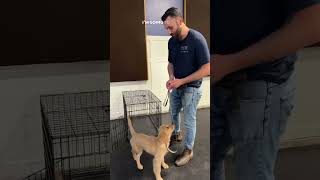
Teach your dog to walk at your side instead of pulling ahead. You will reward the heel position, keep the lead loose and stop walking the moment it goes tight. It suits puppies and adult dogs new to lead work, and needs only a fixed lead, a flat collar or harness and small treats.
YouTube video: Fix Your Dog's Heel Position Fast!
Caption availability is unknown. Check the CC control in the YouTube player.
- Video length
- 1 min 26 s
- Time to do it
- 15 minutes
- Difficulty
- Easy
- Steps
- 9
What you need
Steps
Start indoors or in a quiet garden. Clip the lead to a flat collar or harness and load small treats into a pouch you can reach easily.
Stand still and reward your dog for standing at your left leg. Feed the treat right at your trouser seam so the dog learns where the good spot is.
Hold the lead in the hand on the same side as your dog. Let the slack loop across your body and keep the lead loose, never tight.
Take one slow step. If the dog stays beside you, mark with a word like yes and give a treat.
Stop walking the instant the lead goes tight. Stand still and wait. Do not pull back or drag the dog forward.
Wait until your dog steps back or turns toward you. Reward that, then carry on walking.
Change direction often, turning left and right, so your dog has to watch you instead of pulling ahead.
Add a cue word like heel once your dog holds position for several steps. Say it as the dog arrives at your side, not before.
Practise in 2 to 3 minute bursts, then repeat outside on the pavement and later near other dogs and distractions.
Tips and common mistakes
Never yank or jerk the lead. A steady stop is enough to show the dog that pulling ends the walk.
Reward the position, not just the lack of pulling, so the dog learns where you want it to be.
Keep sessions short and end while your dog is still succeeding.
Avoid retractable leads while training, since constant tension teaches pulling.
Questions
How long does it take to stop a dog pulling?
Most dogs improve within a few weeks of daily short sessions. Expect slower progress with strong pullers or dogs that are highly distracted outdoors.
Should I use a harness or a collar?
A flat collar is fine for a dog that does not pull hard. A front-clip harness gives you more control with a strong puller and puts less strain on the neck.
What if my dog still pulls toward other dogs?
Increase the distance from the trigger and reward your dog for looking back at you. Work closer only once your dog stays calm at that distance.
The notes are drafted automatically from video details and general task knowledge. How the guide was prepared
Report a correction