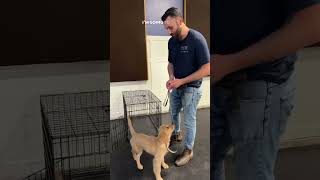
Teach your dog a reliable stay without force by building duration first, then distance, then distractions. It suits puppies and adult dogs that already sit or lie down on cue. You need small soft treats, a quiet space and short daily sessions.
YouTube video: How to Teach your Dog to Stay in 3 Steps Force Free!
Caption availability is unknown. Check the CC control in the YouTube player.
Choose a chapter (7)
- Video length
- 10 min 10 s
- Time to do it
- 10 minutes per session
- Difficulty
- Easy
- Steps
- 7
What you need
Steps
Ask your dog to sit or lie down in a quiet spot with no distractions. Stand close and keep the treat hidden so your dog focuses on you.
Give the stay cue once, then wait just one or two seconds before marking and rewarding. Keep the first reps very short so your dog succeeds.
Reward your dog while it is still holding the position, not after it gets up. Feed the treat to the mouth in place, then release with a clear word like free.
Add one second at a time to each rep. If your dog breaks the stay, go back to a shorter time instead of correcting it.
Once your dog holds for around ten seconds, take one small step back and return to reward. Build distance slowly, a step at a time.
Introduce one mild distraction, such as a toy on the floor or a person walking past. Reward the stay, then release your dog.
Practise in new rooms and outdoors on a long line. Keep sessions short and end while your dog is still succeeding.
Tips and common mistakes
Reward the stay while your dog is still in position, or you teach it that getting up earns the treat.
Only change one of the three Ds at a time: duration, distance or distraction, never all at once.
If your dog keeps breaking, the step is too hard, so make it easier rather than repeating the cue.
Use a release word every time so your dog knows when the stay ends.
Questions
What are the three Ds of a stay?
Duration, distance and distraction. Build duration first, then add distance, then distractions, one at a time.
How long should stay training sessions be?
Keep them to a few minutes, several times a day. Short, successful reps teach faster than long sessions.
What if my dog gets up before I release it?
Go back to an easier step, such as a shorter time or less distance, and reward the successful stay.
The notes are drafted automatically from video details and general task knowledge. How the guide was prepared
Report a correction