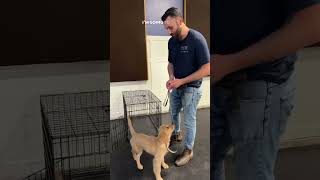
Learn the basics of loose leash walking with a young puppy that has never worn a lead before. You will build eye contact, keep slack in the leash and stop the pulling before it becomes a habit. It suits new owners of puppies around four to six months old and needs only treats, a leash and a quiet spot.
YouTube video: Fix Puppy Pulling: A Guide to Loose Leash Walking
Caption availability is unknown. Check the CC control in the YouTube player.
- Video length
- 6 min 46 s
- Time to do it
- 15 minutes a day
- Difficulty
- Easy
- Steps
- 9
What you need
Steps
Start somewhere boring, like a hallway, garden or empty car park. Clip the leash to a flat collar or front-clip harness and fill a treat pouch with pea-sized soft treats.
Know the opposition reflex. When you pull forward on the leash, your puppy's instinct is to pull back harder. Keep the leash loose and never drag your puppy forward.
Build engagement first. Say your puppy's name, and the second they look at your face, say yes and hand over a treat. Repeat about ten times, then take a break.
Take one step and stop. If your puppy follows and the leash stays slack, mark and reward them right at your leg. This teaches that being near you pays.
Change direction before the leash goes tight. Turn and walk the other way, then reward when your puppy catches up and the line loosens again.
Freeze when the leash tightens. Stand still like a tree and wait. The moment your puppy stops pulling and looks back, reward and walk on.
Keep sessions short. Do five to ten minutes, two or three times a day, and add a few steps of distance each time your puppy stays slack.
Move outside once it works indoors. Pick a quiet street and reward the loose leash every few steps, then slowly ask for more steps per treat.
Add mild distractions last, such as a parked car or a person far away. Stay far enough back that your puppy can still think and take treats.
Tips and common mistakes
Never let your puppy drag you toward a person or dog. Stop and wait for a slack leash before you move on.
Keep the leash loose around the neck and skip choke, prong or shock collars unless a qualified trainer is coaching you in person.
Use tiny treats so you can reward often without overfeeding or slowing your puppy down.
Repeat the same short route at first, because puppies learn the pattern faster than they learn new places.
Questions
Why does my puppy pull on the leash?
Pulling works, so it keeps happening. Walking forward is rewarding, and the opposition reflex makes a puppy push back against leash pressure. Reward a slack leash and pulling stops paying off.
How long until my puppy walks nicely?
Expect a few weeks to a few months of short daily sessions. Puppies need repetition, and progress often slips during the teenage months before it settles.
Do I need a special collar or harness?
A flat collar or a front-clip harness is enough for most puppies. A front-clip harness can reduce pulling while you teach the behaviour.
The notes are drafted automatically from video details and general task knowledge. How the guide was prepared
Report a correction