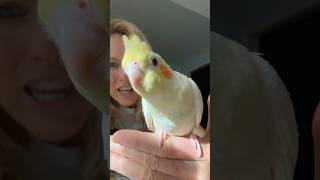
Learn why your cockatiel bites during step-up and how to change your approach so it steps onto your hand calmly. This suits new cockatiel owners and anyone taming a hand-shy bird. You need a calm room, a perch and a favourite treat like millet spray.
YouTube video: Getting Bitten Every Time You Try Step Up With Your Cockatiel? Stop Making This Mistake
Caption availability is unknown. Check the CC control in the YouTube player.
Choose a chapter (9)
- Video length
- 8 min 2 s
- Time to do it
- 20 minutes a day for 2 to 4 we
- Difficulty
- Easy
- Steps
- 7
What you need
Steps
Watch your bird before you reach in. Look for the warning signs: flattened crest, quick head turns, a hiss, or a lean away from your hand. Stop if you see any of them.
Change your approach angle. Bring your hand up from below and in front of the bird, not down from above, so it does not feel like a predator swooping in.
Build a good hand association first. Offer millet from your fingers through the cage bars or in a quiet room, with no step-up asked, until the bird comes to your hand willingly.
Place your index finger or a small perch just above the bird's feet and press gently against its lower belly. Say step up in a calm, even voice.
Wait for the bird to lift one foot and grip. Do not push or chase it. If it backs away, pull your hand back and try again after a short pause.
Reward the moment both feet are on your hand with a treat and calm praise. Keep the first sessions to a few seconds, then set the bird back down.
Repeat short sessions daily, ending each one on a success. Expect slow progress at first and give the bird weeks, not days, to trust your hand.
Tips and common mistakes
Never force your hand under a bird that is leaning away. That is what turns a warning into a bite.
Keep sessions under five minutes so the bird stays interested and does not get overwhelmed.
Use millet only for training so it stays a high-value reward.
If your bird bites, stay still and quiet, then end the session. Do not jerk your hand away fast.
Questions
How long does it take to teach a cockatiel to step up?
It varies by bird. A hand-tame cockatiel may learn in a few days, while a hand-shy or older bird can take several weeks of short daily sessions.
Should I punish my cockatiel when it bites?
No. Raising your voice or tapping the beak teaches fear, not trust. End the session calmly and go slower next time.
Can I train a cockatiel that is scared of hands?
Yes. Start with treats through the cage and let the bird come to you. Move to step-up only once it is comfortable taking food from your fingers.
The notes are drafted automatically from video details and general task knowledge. How the guide was prepared
Report a correction