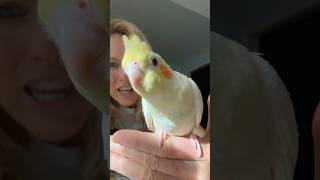
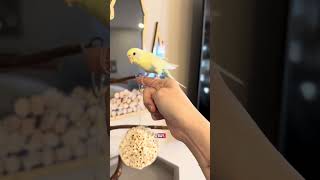
Parrots often lift a foot without really offering to step up, and that bluff is behind a lot of bites. This guide shows the body language that separates a real step-up from a fake one and how to offer your hand or a perch safely. It suits new parrot owners and anyone working with a nervous rescue bird.
YouTube video: The FAKE Step-Up! 🦜 How to Spot It BEFORE Your Parrot Bites You! 😳
Caption availability is unknown. Check the CC control in the YouTube player.
- Video length
- 2 min 32 s
- Time to do it
- 5 minutes
- Difficulty
- Easy
- Steps
- 9
What you need
Steps
Stand back and watch your parrot for a few seconds before you open the cage. Look at the crest, the feathers, the eyes and the overall posture.
Check the eyes. Fast pupil pinning, a hard stare or a wide unblinking eye is a warning sign, not an invitation to reach in.
Read the body. A bird that leans away, crouches low, fluffs up or tightens its grip on the perch is not offering a real step-up.
Listen for hissing, a sharp click or a low growl. Any of these means give the bird space and try again later.
Compare the feet with the body. A lifted foot plus a relaxed lean toward you is a real step-up. A lifted foot plus a lean away is a bluff.
Test with a perch instead of your hand. Hold a dowel steady at chest height and press it gently against the bird's lower chest.
Say the cue once and keep still. Let the bird choose to step on within a few seconds rather than nudging it again and again.
Reward the moment both feet are on the perch, then set the bird down. End the session while it is still going well.
If the bird lunges, freezes or leans away, draw the perch back slowly and stop. Do not jerk your hand away or the bird may fall.
Tips and common mistakes
Keep training sessions to one or two minutes and repeat them two or three times a day.
Use a steady nudge against the chest, never a hard push, and keep your hand still while the bird decides.
A rehomed or hormonal parrot can take weeks to give a reliable step-up, so judge progress by calmness, not speed.
Wear long sleeves or use a perch if you are unsure, so a nip does not make you snatch your hand back.
Questions
Why does my parrot lift a foot and then bite me?
A lifted foot alone is not consent. If the body leans away, the feathers are tight or the eyes are pinning, the bird is bluffing and a bite often follows.
Should I use my hand or a perch?
Use a perch until the bird steps up calmly every time, especially with a new, nervous or rescue bird. Your hand can come later.
How long does it take to teach a step-up?
A relaxed bird may pick it up in a few days of short daily sessions. A scared or recently rehomed bird can take several weeks.
The notes are drafted automatically from video details and general task knowledge. How the guide was prepared
Report a correction