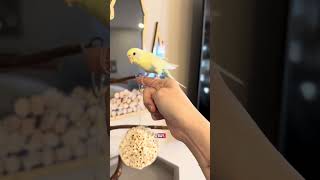
Step up is the first handling skill most parrots learn. It lets you move a bird safely from place to place and builds trust. This guide suits owners of young or new birds and needs only your hand, a perch and short, calm sessions.
YouTube video: Noa is 32 days old! How to teach “step up”
Caption availability is unknown. Check the CC control in the YouTube player.
- Video length
- 2 min 58 s
- Time to do it
- 10 minutes a day for a week
- Difficulty
- Easy
- Steps
- 7
What you need
Steps
Pick a quiet time when the bird is calm and not hungry or tired. Sit at the bird's eye level so your hand does not loom over it.
Offer a short perch or your index finger just above the bird's feet, at chest height. Hold it steady and wait. Do not push it into the bird.
Say a cue like step up in a soft, even voice. Keep the same words and tone every time so the bird links the sound to the action.
Gently press the perch or finger against the lower chest just above the feet. Most birds lift one foot and grip on their own.
The moment the bird puts a foot on, praise it quietly and give a small treat. Then put it straight back down so the step is short.
Repeat three to five times, then stop for the day. End while the bird is still calm and before it loses interest.
Once the bird steps up every time, add a second hand or perch in front and cue step up again to move it across.
Tips and common mistakes
Keep sessions under five minutes and stop early if the bird backs away or fluffs up.
Never grab the bird or chase it with your hand, since that teaches it to fear hands.
Reward with a treat the bird only gets during training so the cue stays valuable.
Wash your hands before and after handling, and keep the bird away from your mouth and food.
Questions
How long does it take a young parrot to learn step up?
Many young birds pick it up in a few short sessions over about a week. Older or nervous birds can take longer, so go at the bird's pace.
What if my bird bites when I offer my hand?
Stop and back off, then try again with a perch instead of your finger. Biting usually means the bird is scared or the hand moved too fast.
Should I use a glove?
A thin glove can help if you are nervous, but many birds dislike the look of it. Try bare hands first with slow, steady moves.
The notes are drafted automatically from video details and general task knowledge. How the guide was prepared
Report a correction