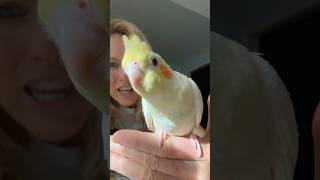
This guide walks you through taming a nervous cockatiel using treats, body language and target training instead of force. It suits new owners and anyone with a scared rescue bird. You need a quiet room, a small target stick and a treat your cockatiel loves.
YouTube video: How to Tame a Cockatiel Without Forcing It
Caption availability is unknown. Check the CC control in the YouTube player.
Choose a chapter (8)
- Video length
- 9 min 12 s
- Time to do it
- 10 minutes a day for 2 to 6 we
- Difficulty
- Easy
- Steps
- 8
What you need
Steps
Pick a quiet room with the door shut, ceiling fans off and other pets out. Sit beside the cage and talk softly while your cockatiel settles. Keep each session to about 10 minutes.
Watch for fear signals before you reach in. A raised crest, fast breathing, hissing, swaying or leaning away all mean slow down. Stop and back off when you see them.
Offer a spray of millet or a favourite seed through the cage bars, then just inside the open door. Let the bird come to the treat. Never chase it with your hand.
Teach target training with a small stick or a capped pen. Hold the tip just in front of the beak and reward the moment your bird touches it. Move the target a little further each session.
Move your hands slowly and keep them below your bird's eye level. Bring a hand up in a straight, steady line instead of reaching over the top. Pair every approach with a treat.
Rest your finger or a hand perch just above your cockatiel's feet and wait. Do not push into the chest. Use the target stick to guide one foot up, then reward, and build up to both feet.
If your bird bites, flies off or steps backwards, pause and go back one easier step. End on a calm note and try again the next day. Never grab or towel a bird to make it step up.
Keep sessions short and let your cockatiel choose to come to you. Reward calm behaviour, not just tricks. Trust can take weeks or months, and small improvements still count.
Tips and common mistakes
Use millet or a seed your bird only gets during training so the reward stays worth working for.
Train before a meal when your cockatiel is a little hungry, but never withhold food.
A flat, relaxed crest means calm, while a raised crest means your bird is alert or scared.
Keep non-stick pans, aerosols and scented candles away from birds, since the fumes can be deadly.
Questions
How long does it take to tame a cockatiel?
It varies a lot. Some birds step up within a few weeks, while shy or older birds can take months. Short daily sessions work better than one long one.
Should I push my finger into my cockatiel's chest to make it step up?
No. A light touch above the feet cues some birds, but pushing usually scares a nervous cockatiel. Guide it with a target stick and wait instead.
My cockatiel bites when I offer my hand. What should I do?
Back off and go back to rewarding your bird for staying calm near your hand. Bites usually mean you moved too fast, so shorten the step and try again tomorrow.
The notes are drafted automatically from video details and general task knowledge. How the guide was prepared
Report a correction