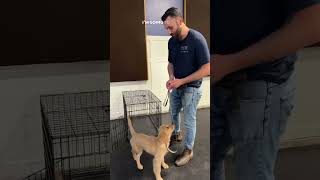
A pulling dog is usually a dog setting the pace of the walk. This guide shows you where to place the lead on your dog's neck and how to hold it so the lead stays slack. It suits any size of dog and needs only a fixed-length lead and a collar or slip lead.
YouTube video: Why Dogs Pull—and How to Stop It
Caption availability is unknown. Check the CC control in the YouTube player.
- Video length
- 1 min 47 s
- Time to do it
- 15 minutes a day
- Difficulty
- Easy
- Steps
- 8
What you need
Steps
Pick a fixed-length lead and a collar or slip lead. Leave the retractable lead at home for now, because constant tension teaches a dog to pull.
Sit the lead high on the neck, just behind the ears and under the jaw. Keep it in that spot for the whole walk.
Hold the lead in the hand nearest the dog and keep your other hand free. Never wrap the lead around your fingers or wrist.
Start somewhere quiet, like a driveway or a quiet street. Walk a few steps, stop, and let the dog settle before carrying on.
Keep slack in the lead. The moment it goes tight, stop walking and stand still until the dog steps back and the lead loosens.
Change direction when the dog surges ahead. Turn and walk the other way so the dog has to check in and follow you.
Give a treat or calm praise every time the dog walks beside you with a loose lead.
Practice for 10 to 15 minutes a day. Move to busier streets only once the lead stays slack in quiet places.
Tips and common mistakes
A lead sitting low on the shoulders or chest gives the dog leverage, so it leans in and pulls harder.
Skip jerking or yanking the lead, which can hurt the neck. Steady stops and turns work better.
Keep sessions short and finish while the dog is still walking well.
Everyone in the house should hold the lead the same way, or the pulling comes straight back.
Questions
Where exactly should the lead sit on my dog's neck?
High up, just behind the ears and under the jaw, where you have the most control. A lead resting low on the shoulders lets the dog lean into it and pull.
Will a harness stop my dog pulling?
Most standard harnesses make pulling easier because the dog can lean its whole body into them. If you use one, choose a front-clip harness made to turn the dog.
How long until the pulling stops?
It depends on the dog's age and how long the habit has been running, but short daily sessions usually show a change within a few weeks. Consistency matters more than long walks.
The notes are drafted automatically from video details and general task knowledge. How the guide was prepared
Report a correction