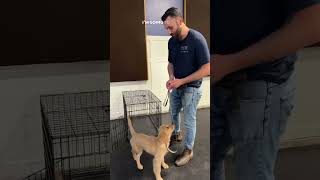
This guide is for dogs that walk out in front and still drag the leash tight. You will teach your dog that staying ahead is fine, but only while the leash hangs loose. It suits any age or breed and works best with small, high-value treats and a quiet starting spot.
YouTube video: The “Out-Front Dog”: Fixing the Last 10% of Leash Walking
YouTube’s video details do not confirm captions. Check CC in the player for available tracks.
- Video length
- 2 min 54 s
- Time to do it
- 10 minutes
- Difficulty
- Easy
- Steps
- 9
What you need
Steps
Cut treats into pea-sized pieces and load them in a pocket or treat pouch before you clip the leash on. Small pieces mean you can reward often without overfeeding.
Start somewhere quiet, like a driveway or an empty path, so your dog has a fair chance of keeping the leash slack.
Hold the leash handle in one hand near your hip and let the slack fall across your body. Keep your arm relaxed, not stiff.
Let your dog move out in front. The moment the leash goes tight, stop and stand still. Do not reel the dog in.
Wait for your dog to look back or step toward you, which puts slack in the leash. Then say yes and drop a treat beside your leg.
If your dog keeps pushing forward, turn and walk the other way for a few steps. Following you should pay better than pulling.
Reward the out-front position on purpose. Every 3 to 5 steps with a loose leash, drop a treat at your side so your dog checks in.
Practice for 5 minutes, take a break, then repeat once more. End the session while your dog is still getting it right.
Add distractions one at a time, such as a parked car, a doorway or a person. If the leash tightens, go back to the last easy step.
Tips and common mistakes
Never jerk or yank the leash. Tension teaches a dog to pull harder, so stop moving instead.
Reward the position you want, not just eye contact. Drop the treat at your hip so your dog does not drift across your feet.
Use a flat collar or front-clip harness. Skip choke, prong and slip leads for this training.
Keep sessions to 5 or 10 minutes. Short and frequent beats one long, frustrating walk.
Questions
Should my dog walk beside me or out in front?
Either is fine as long as the leash stays loose. Many dogs prefer walking slightly ahead, and that is not a problem if they are not pulling.
Why does my dog still pull after weeks of practice?
Pulling usually keeps working on normal walks, because the dog still gets to move forward. Stop every time the leash tightens so forward motion only happens on a slack leash.
How long until my dog walks on a loose leash?
It varies by dog and by how consistent you are. Short daily sessions of 5 to 10 minutes usually show clear progress within a few weeks.
The notes are drafted automatically from video details and general task knowledge. How the guide was prepared
Report a correction