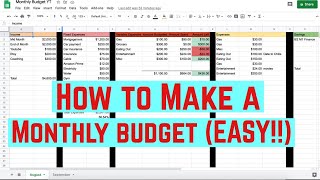
Build a simple budget tracker in Google Sheets that logs daily spending and rolls it up into a monthly view. It suits beginners, students and households who want one place to see where the money goes. You only need a free Google account and a list of your accounts.
YouTube video: Daily and Monthly Budget Tracker Tutorial | Google Sheets Template with Automated Dashboard
Caption availability is unknown. Check the CC control in the YouTube player.
- Video length
- 6 min 21 s
- Time to do it
- 30 minutes
- Difficulty
- Easy
- Steps
- 9
What you need
Steps
Open Google Sheets and create a blank spreadsheet. Name it Budget Tracker, then add three tabs at the bottom: Transactions, Monthly Budget and Dashboard.
In the Transactions tab, type these headers in row 1: Date, Description, Category, Subcategory, Account, Type and Amount. Freeze row 1 so the headers stay visible as you scroll.
Select the Category column and use Data, Data validation to add a dropdown list of your categories, such as Groceries, Rent, Transport and Fun. Repeat for the Account column.
Create an Accounts tab and list each account on its own row with its starting balance. Keep it to six accounts or fewer so the monthly summary stays readable.
Record every expense on the day it happens. Enter the date, who you paid, the category, the account it came from and the amount as a negative number.
On the Monthly Budget tab, list your income at the top, then a planned amount for each category underneath. Add a column for actual spending next to it.
Use SUMIFS to pull real totals into the actual column. The formula sums the Amount column where the category matches and the date falls inside the current month.
Build the Dashboard tab with a pie chart of category totals and a bar chart comparing planned versus actual spending. Insert charts from the Insert menu and point them at your summary cells.
At the end of each month, compare planned against actual, note the categories you overspent on, and adjust next month's planned amounts.
Tips and common mistakes
Log expenses the same day, because a week of receipts is much harder to rebuild later.
Keep category names identical everywhere so your SUMIFS totals do not split into near-duplicate rows.
Enter amounts as plain numbers with no currency symbols, then format the column as currency.
Start with five to eight categories. You can always split one later once you see the pattern.
Questions
Can I update the tracker from my phone?
Yes. Install the Google Sheets app and sign in with the same account. Edits sync automatically, so you can log an expense right after you pay.
Do I need to pay for a template?
No. You can build the whole tracker yourself with the steps above. Paid templates mainly save time by adding ready-made charts and formatting.
How do I handle cash and cards in the same tracker?
Use the Account column to mark where the money came from, such as Cash, Debit or a credit card. The category totals stay combined while the account totals stay separate.
The notes are drafted automatically from video details and general task knowledge. How the guide was prepared
Report a correction