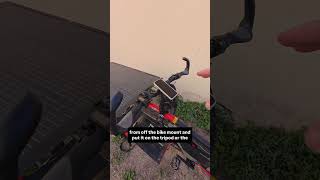
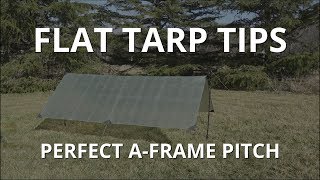
Wait… Your Bike Can Do THIS?! | Bikepacking Tarp Setup, by WOODIBIKER | DIY+ on YouTube. 4 min 2 s.
- Video length
- 4 min 2 s
- Time to do it
- 10 minutes
- Difficulty
- Easy
- Steps
- 7
What you need
Steps
Choose a flat, dry spot on high ground. Check above you for dead branches and look at where water would run if it rains.
Lay the 3x3 m tarp flat and tie a short cord loop to each corner you will use. The loops let you stake or tie the tarp without punching holes in it.
Set the bike as your high point. Put it in a low gear, apply the brakes or strap the wheels so it cannot roll, then lean it at a steady angle.
Drape one long edge of the tarp over the saddle and handlebars so the bike holds up the ridge of the shelter.
Tie the two tarp corners at the bike end to the frame, saddle rails or handlebars with a quick-release knot such as a slipped half hitch.
Pull the two opposite corners away from the bike and stake them down. Keep the fabric taut but not drum-tight, so it can flex in the wind.
Use the third stake on the middle of a long edge or on a door flap. Lie inside and adjust the lines until the fabric stays clear of your sleeping bag.
Tips and common mistakes
Pitch the lowest edge into the wind and keep the open side away from it.
Leave a gap at ground level for airflow, or condensation will soak your bag by morning.
Put a mat or groundsheet down first and keep the tarp fabric off your sleeping bag.
In strong wind, lower the bike end and add extra stakes or tie the tarp to a heavy part of the bike.
Questions
Can I pitch this without a kickstand?
Yes. Lay the bike on its side or lean it against something solid, then tie the tarp to the frame so the bike cannot move.
What size tarp do I need?
A 3x3 m tarp gives one person room to lie down with some gear. Smaller tarps leave little cover for your head and feet.
What if it rains?
Keep the low edge facing the wind and stake it tight. A taut tarp sheds water better, so avoid letting it sag into a pool that touches your bag.
This guide was drafted from the video's details and general task knowledge. It has not been checked against the full video. Check the video and relevant product instructions before following a procedure. Report a correction.