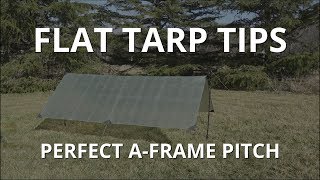
Tarp Camping Masterclass - Everything You Need to Know!, by JupiterHikes on YouTube. 25 min 18 s.
- Video length
- 25 min 18 s
- Time to do it
- 15 minutes
- Difficulty
- Easy
- Steps
- 8
What you need
Steps
Pick a flat, clear pitch with level ground and no dead branches overhead. Avoid low spots where water pools and stay clear of loose limbs.
Choose your tarp size. A 7x9 foot flat tarp is the smallest to use for one person. A 9x10 gives more coverage and more pitching options.
Cut your guylines. Make two ridgeline lines of 7 to 9 feet, four corner lines of 5 to 6 feet, and side lines of 2 to 3 feet.
Attach each line to a tarp tie-out with a bowline hitch. Tie a tautline hitch at the stake end so it slides to adjust tension. Linelocs work too.
With no trees, set two trekking poles to the same height and put one tip under the ridgeline tie-out at each end. Between trees, tie the ridgeline to both trunks.
Stake the four corners out wide and tighten the ridgeline until the tarp forms a firm A-frame. Push each stake in at an angle pointing away from the tarp.
In wind or rain, drop the poles lower and add the side guylines. A low, tight pitch sheds weather better than a tall one.
Lay your groundsheet inside before unpacking your bag. Polycryo is the lightest option, while Tyvek is heavier but lasts far longer.
Tips and common mistakes
Longer guylines give you more pitching options, so start with 7 to 9 feet on the ridgeline.
Leave the tarp at home when bugs are heavy, or bring a headnet or a tarp with a built-in bug net.
Skip exposed camps above treeline in rough weather, since a tarp has no walls to block wind.
Check for dead branches above your pitch before you stake anything out.
Questions
Can you pitch a tarp without trees?
Yes. Two trekking poles set to the same height hold up the ridgeline, and you stake the corners and sides as normal. Trees only make it faster.
What size tarp do I need for one person?
A 7x9 foot flat tarp is the minimum most people use. A 9x10 is more comfortable, gives better storm coverage and allows more setups.
What do you sleep on under a tarp?
Put a groundsheet down first to protect you and your gear from damp ground. Polycryo is lightest, Tyvek is tougher.
This guide was drafted from the video's details and general task knowledge. It has not been checked against the full video. Check the video and relevant product instructions before following a procedure. Report a correction.