20 POOR MAN'S Tarp Tricks That Make $2,000 Tent Setups Look Overpriced, by American Practical Frontier on YouTube. 26 min 1 s.
- Video length
- 26 min 1 s
- Time to do it
- 20 minutes
- Difficulty
- Easy
- Steps
- 10
What you need
Steps
Pick a flat, well-drained spot out of the wind. Look up before you unpack and avoid dead branches or loose rock overhead.
Match the tarp to the job: 8x10 ft is enough for one person lying down, and 10x12 ft or larger covers two people plus gear.
Tie a ridgeline between two trees at about chest height using a taut-line hitch, so you can tighten it later when the cord stretches.
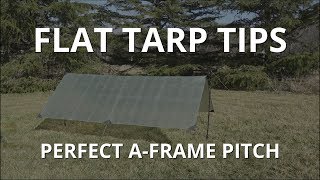
Drape the tarp over the line with the long edge running along it. Pull the corners out and stake them at a 45 degree angle away from the shelter.
For an A-frame, spread the sides wide. In wind and heavy rain, bring the edges closer to the ground so the tarp sheds gusts instead of catching them.
Where stakes won't hold, wrap each corner around a fist-sized rock, tie a slip knot behind the rock, then bury or wedge it.
Reinforce weak tie-out points before the wind finds them. Wrap a small pebble in the tarp corner and tie behind it, or add a patch of tape over a fraying grommet.
Clear a shallow lip of soil along the uphill edge so runoff runs around the shelter rather than under your sleeping bag.
Leave a gap on the sheltered side for airflow, then retighten every guy line before you sleep.
To catch rain, drop one corner low, let the tarp sag into a funnel and set a container under the lowest point.
Tips and common mistakes
Cheap hardware store tarps work but are heavy and noisy, so a coated nylon or polyester tarp with reinforced corners packs better.
Wet cord stretches, so retie and tighten your lines before bed and again once rain starts.
Keep the windward edge pinned to the ground and put a groundsheet, dry leaves or a foam mat between you and the soil.
Never camp under a lone dead tree or on a slope where water will run straight through the pitch.
Questions
Can I use a cheap plastic tarp instead of a camping tarp?
Yes, and it will keep you dry. It is heavier, louder in wind and the grommets tear more easily, so add rock anchors or pebble tie-outs at the corners.
How do I stop rain blowing in under the tarp?
Pitch low and tight on the windward side, and site the shelter behind a natural windbreak such as dense trees or a bank. Leave the sheltered side open for airflow.
Do I need to know knots?
Two are enough. Use a taut-line hitch for adjustable guy lines and a bowline or two half hitches for fixed loops around trees and rocks.
This guide was drafted from the video's details and general task knowledge. It has not been checked against the full video. Check the video and relevant product instructions before following a procedure. Report a correction.