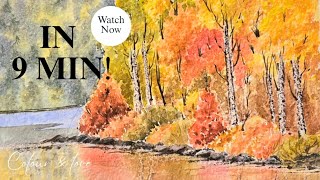
Learn to Paint a Bob Ross Style Autumn Landscape | Beginner Oil Painting Wet on Wet | Autumn Valley, by Karl Von Artistry Painting on YouTube. 36 min 18 s.
- Video length
- 36 min 18 s
- Time to do it
- 1 hour 30 minutes
- Difficulty
- Medium
- Steps
- 10
What you need
Steps
Lay out your paints on the palette in the order you will use them: whites, yellows, oranges, reds, browns, greens and blues. Keep the colours separate and clean.
Coat the whole canvas with a thin, even layer of liquid white. Wipe off excess with a rag so the surface is slick but not wet and drippy.
Load the 2 inch brush with blue and white and paint the sky with light, criss-cross strokes. Blend the horizon lighter and leave the top a deeper blue.
Mix white with a touch of yellow and orange for clouds. Tap them in with the flat brush, then soften the edges with a clean dry brush.
Paint the distant hills with blue and white mixed with a little brown. Use the flat brush and keep the strokes soft and low on the canvas.
Add the autumn treeline with the fan brush. Load it with yellow, orange and red and tap in clumps of leaves, working from back to front.
Paint the foreground ground with browns and greens, then add a path or valley floor with lighter strokes. Blend the edges into the midground.
Use the palette knife to scrape in a few tree trunks and branches. Pull the knife upward in thin lines and keep the pressure light.
Add foreground bushes and grass with the fan brush and small detail brush. Use darker greens and browns to push them forward.
Step back and check the balance. Add highlights on the trees and a few final leaves, then let the painting dry flat for several days.
Tips and common mistakes
Use very little paint at a time. Wet-on-wet works best with thin layers, and thick blobs turn muddy.
Clean your brush between colours with thinner and dry it on a rag so the colours stay bright.
Work from the back of the scene to the front so the foreground covers the edges of the distant layers.
Keep the room ventilated and use odourless thinner, since oil paints and solvents give off fumes.
Questions
Do I need liquid white to paint in the Bob Ross style?
It is the standard base for wet-on-wet oil painting because it lets the paint glide and blend. You can make a substitute by mixing titanium white with a little linseed oil.
How long does an oil painting take to dry?
Thin layers usually touch-dry in a few days and fully cure in several weeks. Lay the canvas flat in a dust-free room while it dries.
Can I do this with acrylics instead of oils?
Yes, but acrylics dry fast, so you cannot blend wet-on-wet the same way. Use a slow-drying medium or a stay-wet palette to get more working time.
This guide was drafted from the video's details and general task knowledge. It has not been checked against the full video. Check the video and relevant product instructions before following a procedure. Report a correction.