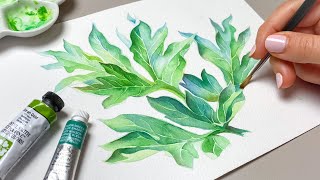
How to Paint Leaves and Stems in Oil with Mandy Theis, by Art School Live with Eric Rhoads on YouTube. 46 min 49 s.
- Video length
- 46 min 49 s
- Time to do it
- 45 minutes
- Difficulty
- Medium
- Steps
- 10
What you need
Steps
Set out your oil paints: titanium white, yellow ochre, lemon yellow, ultramarine blue, phthalo blue, burnt sienna and alizarin crimson. Put a small amount of each on the palette and keep the piles separate.
Mix natural greens by starting with yellow and blue, then dull the mix with a touch of burnt sienna or red. Make three versions: light, middle and dark. Keep them slightly grey rather than pure.
Test the greens on a spare canvas or corner. Paint small swatches next to your flowers, then adjust with white for light or blue and sienna for shadow. Judge the colour after a moment.
Load a small round or filbert brush with enough paint for one stem. Place the brush at the top and pull down in one steady stroke. Turn the brush as you go to keep the line thin.
Vary stem thickness and direction. Some stems can stand straight, others curve or cross. Leave small gaps where stems meet leaves so the lines do not look stiff.
Paint only the key leaves. Pick five to seven leaves that explain the shape of the arrangement, then simplify the rest into soft masses. Do not outline every leaf.
Shape each leaf with one or two strokes. Load a flat or filbert brush, touch the canvas at the base, press and lift toward the tip. Add a darker vein while the paint is wet.
Match the light across the painting. Use the same light green mix on flower petals and leaf edges that face the window. Use the same shadow mix in deep leaves and flower shadows.
Refine the edges. Soften back leaves with a clean dry brush and keep front leaves sharper. Add a few thin highlights on stems that catch the light.
Step back and check the values by squinting. Add one or two dark leaves near the base to ground the bouquet, then stop before the leaves look overworked.
Tips and common mistakes
Wipe excess paint from the brush before painting a thin stem, or the stroke will start with a blob.
Mix more green than you think you need so you do not stop mid-leaf to rematch the colour.
If the greens look artificial, add a little burnt sienna or red rather than more black.
Work in a ventilated room and keep solvent away from your skin and eyes.
Questions
How do I keep thin stems from looking shaky?
Use a small round brush with a sharp point, load it evenly and pull the stroke toward you in one go. Turn the canvas if that makes the angle easier.
What colours make natural green leaves?
Mix yellow and blue, then dull the mix with burnt sienna or a little red. Make light, middle and dark versions instead of one flat green.
Should I paint every leaf in the arrangement?
No. Paint the leaves that describe the shape and light, then simplify the rest into soft masses. Too many separate leaves can make the painting busy.
This guide was drafted from the video's details and general task knowledge. It has not been checked against the full video. Check the video and relevant product instructions before following a procedure. Report a correction.