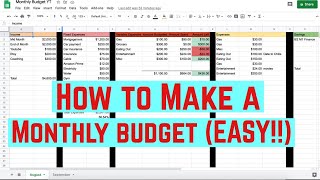
You will build a monthly budget that matches your real pay cycle and leaves money for savings. It suits beginners who want a simple spreadsheet or app instead of guessing where their pay goes. All you need is last month's bank statements and 20 quiet minutes.
YouTube video: how to budget and *actually* save money 💸 how I track + plan my spending (budgeting for beginners) 💰
Caption availability is unknown. Check the CC control in the YouTube player.
- Video length
- 21 min 5 s
- Time to do it
- 30 minutes
- Difficulty
- Easy
- Steps
- 8
What you need
Steps
Write down your take-home pay for a normal month, including any side income. Note the date each payment lands so you can plan around a weekly, fortnightly or monthly pay cycle.
List every fixed cost: rent or mortgage, power, water, phone, internet, insurance, transport and subscriptions. Use the real amounts from last month's statements rather than a guess.
Find the bills that arrive quarterly or yearly, such as car registration or insurance. Divide each one by 12 and put that amount in the budget as a monthly cost.
Track your spending for one full month. Log every purchase in a spreadsheet or app and sort each one into a category like groceries, eating out, fuel and fun.
Compare what you spent in each category with your income. Set a realistic limit for the next month, starting slightly above what you actually spent.
Pick a savings amount you can hit every month, even a small one. Set an automatic transfer to a separate savings account for the day after payday.
Split your money across accounts on payday: bills, everyday spending and savings. Move the bills amount first so it is never spent by accident.
Check the budget once a week, not once a month. Move money between categories when life changes and fix the plan instead of giving up on it.
Tips and common mistakes
Round your bills up slightly so the leftover becomes a small buffer for surprise costs.
Cancel or pause subscriptions you forgot about before you set your limits.
Budget only the money already in your account, not a pay you expect later in the month.
Keep a small buffer in your spending account so one big week does not wreck the plan.
Questions
Do I need a paid app or template to start?
No. A free spreadsheet with one column for income and one row per category works fine. Move to an app later if you want automatic tracking.
How much should I save each month?
A common target is 20 percent of your take-home pay, but start with any amount you can repeat. Consistency matters more than the size of the first transfer.
What if I get paid weekly or fortnightly?
Budget per pay cycle instead of per month. Divide monthly bills by four or two and set that amount aside each time you are paid.
The notes are drafted automatically from video details and general task knowledge. How the guide was prepared
Report a correction