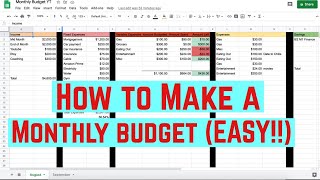
You will set up a 30-day money reset: track what you spend, build a budget that fits your income, start an emergency fund and make a debt plan. It suits anyone living paycheck to paycheck or new to budgeting. You only need your bank statements and a notebook or budgeting app.
YouTube video: If I Had 30 Days to Fix My Finances, Here's Exactly What I'd Do
Caption availability is unknown. Check the CC control in the YouTube player.
Choose a chapter (6)
- Video length
- 12 min 53 s
- Time to do it
- 30 days
- Difficulty
- Easy
- Steps
- 10
What you need
Steps
Gather your bank and card statements from the last two months. Write down every income source and its amount after tax, so you work with real take-home pay.
List your fixed bills: rent, utilities, transport, insurance and loan payments. Then add up what you actually spent on food, shopping and fun last month.
Track every purchase for seven days in a notebook or budgeting app. Label each one as a need or a want, then total the wants.
Build a monthly budget that matches your income. Give every pound or dollar a job, covering bills first, then savings, then spending.
Pick two or three want categories that grew fastest and set a lower limit for each. Cancel any subscription you have not used in 30 days.
Plan your payday. On the day you get paid, move your savings amount and bill money out first, so what is left is safe to spend.
Open a separate savings account for your emergency fund and set a starter goal you can reach in a month, even if it is small.
List each debt with its balance and interest rate. Pay the minimum on all of them and send any extra to the highest rate first.
Choose one way to raise your income this month, such as overtime, selling unused items or a small freelance job, and put that money to savings or debt.
Set a 15-minute weekly money check on the same day each week. Review spending, update your budget and write your goals for the next 90 days.
Tips and common mistakes
Use real statements, not guesses, because a budget built on remembered numbers usually fails by week two.
Keep the first emergency fund target small and reachable, then build it up once the habit sticks.
Leave a small fun amount in the budget, since cutting everything at once is the quickest way to quit.
Questions
How long should I track expenses before making a budget?
One full week is enough to spot patterns. Two months of statements give a more accurate picture of bills and irregular costs.
How much should go into an emergency fund first?
Start with one week of essential expenses, then build towards one month. The exact figure matters less than starting and adding to it every payday.
What if my income changes every month?
Budget from your lowest recent month and treat anything extra as a bonus for savings or debt.
The notes are drafted automatically from video details and general task knowledge. How the guide was prepared
Report a correction