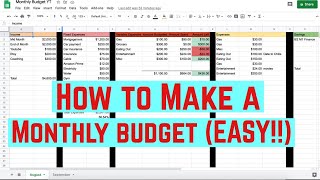
You will build a line-by-line budget for the coming year using last year's profit and loss statement as your starting point. It suits small business owners who want a clear spending and revenue plan in a spreadsheet. You need last year's P&L and a spreadsheet app such as Excel or Google Sheets.
YouTube video: How to Create a Business Budget from Scratch in Excel
Caption availability is unknown. Check the CC control in the YouTube player.
- Video length
- 40 min 20 s
- Time to do it
- 2 hours
- Difficulty
- Medium
- Steps
- 8
What you need
Steps
Open a new spreadsheet and name it with the budget year, such as "2024 Budget". Add a tab for the budget and a tab for your assumptions.
Copy every income and expense line from last year's profit and loss statement into the first column. Keep the same order so you can compare later.
Add columns for each month, January through December, plus a total column. Put revenue lines at the top and expenses below them.
Enter your expected sales month by month. Base each figure on last year's numbers, known contracts, and any planned price or volume changes.
Fill in cost of goods sold for each month. Use your supplier costs, materials, freight and payment fees, then calculate gross profit with a simple formula.
List operating costs such as rent, insurance, software, marketing, travel and professional fees. Add payroll, contractor costs and estimated taxes on separate lines.
Total each month and the full year with SUM formulas. Check that the net profit figure matches your goal and adjust the expense lines where needed.
Save a copy as your working budget. Each month, enter actual figures beside the budget and review the differences before you update the forecast.
Tips and common mistakes
Use formulas for totals and subtotals so a change in one month flows through the whole budget.
Build the budget before the year starts, then update it monthly with actuals instead of waiting until year end.
Add a contingency line of 5 to 10 percent of operating costs for costs you did not plan for.
Keep your assumptions in one place, such as a separate tab, so you can change growth, pay or cost rates quickly.
Questions
Can I use Google Sheets instead of Excel?
Yes. The steps are the same in Google Sheets, Numbers or any spreadsheet app that can add columns and use SUM formulas.
How many line items should the budget have?
Enough to see where money comes in and goes out. Group small costs together, but keep rent, payroll, taxes and large suppliers separate.
What if I do not have last year's profit and loss statement?
Use your bank statements, accounting software reports and invoices to rebuild the main income and expense lines before you start.
The notes are drafted automatically from video details and general task knowledge. How the guide was prepared
Report a correction