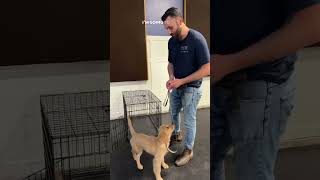
Crate training works best when your puppy sees the crate as a calm, rewarding place. This guide suits new puppy owners and covers building value for the crate, setting up a calming space, preparing for alone time and handling whining. You need a crate, treats and a few short sessions each day.
YouTube video: Crate Training Doesn't Need To Be Stressful!
Captions are available. Use CC in the YouTube player.
Choose a chapter (5)
- Video length
- 15 min 24 s
- Time to do it
- 20 minutes a day for 1 to 2 we
- Difficulty
- Easy
- Steps
- 7
What you need
Steps
Place the crate in a quiet, low-traffic spot where your puppy can still see and hear the family. Leave the door open so your puppy can walk in and out freely.
Toss a treat inside the crate and let your puppy go in to get it. Repeat a few times, then feed meals near or inside the crate.
Add a soft blanket or bed and a safe chew toy so the crate feels like a calm den. Never send your puppy to the crate as punishment.
Close the door for a few seconds while your puppy is relaxed, then open it before any fuss starts. Build up to a minute, then longer.
Practice short absences by stepping out of the room for a few seconds and returning calmly. Increase the time in small steps.
When your puppy whines, wait for a pause in the noise before you open the door. Do not let your puppy out mid-whine.
Keep sessions short and end on a win. Aim for several calm crate sessions each day rather than one long one.
Tips and common mistakes
Feed and treat your puppy in the crate so it links the crate with good things.
Never use the crate to punish your puppy or it will learn to fear it.
Let your puppy out for a toilet break before crate time to avoid accidents.
If whining continues for a long time, shorten the next session and build up more slowly.
Questions
How long should a puppy stay in the crate?
Start with seconds and build up slowly. Young puppies cannot hold their bladder long, so keep early sessions short and take them out often.
Should I let my puppy cry in the crate?
Wait for a brief pause in the whining before opening the door. Releasing your puppy mid-whine teaches that whining works.
Where should the crate go?
Put it in a quiet spot that is still near the family. Your puppy should feel part of the home, not isolated.
The notes are drafted automatically from video details and general task knowledge. How the guide was prepared
Report a correction