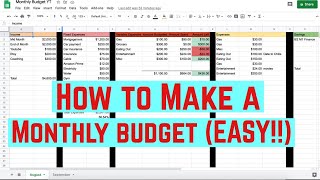
You will list reliable income, fixed bills and 14 days of variable spending, then calculate your net free cash flow. It suits anyone who wants to see where their money goes and free up a surplus. Use recent bank and card statements so the numbers are real.
YouTube video: How to Build a Personal Cash Flow Statement: 4 Steps to Control Your Money.
Caption availability is unknown. Check the CC control in the YouTube player.
- Video length
- 2 min 13 s
- Time to do it
- 30 minutes plus 14 days of tra
- Difficulty
- Easy
- Steps
- 7
What you need
Steps
List your reliable cash inflows from the last two or three months. Include take-home pay, regular freelance work and stable benefits, but leave out one-off refunds or bonuses.
Write down every fixed commitment and its due date. Include rent or mortgage, utilities, insurance, loan payments, childcare and subscriptions. Use the amount that actually leaves your account each month.
Track all variable spending for 14 days. Record groceries, transport, eating out, coffee, clothes and small online purchases as they happen, using a spreadsheet, notebook or budgeting app.
At the end of the 14 days, group the variable spending into categories. Add up each category and multiply by about two to estimate a monthly figure, or use the exact number of days you tracked.
Add your fixed commitments to your monthly variable spending estimate. This total is your cash outflow. Check it against your bank statements so nothing is missing or counted twice.
Subtract total cash outflow from reliable cash inflow. The result is your net free cash flow. A positive number is surplus you can assign; a negative number shows where you need to cut back.
Decide where the surplus goes before you spend it. Split it between debt repayment, an emergency fund, savings and productive assets, and review the plan each month.
Tips and common mistakes
Use cleared bank and card amounts, not round guesses, so the statement reflects real cash movement.
Divide annual or quarterly bills by 12 and include that amount in your monthly fixed costs.
Do not count transfers between your own accounts as income or spending.
Review the audit every few days; waiting until day 14 makes receipts easy to forget.
Questions
What counts as reliable cash inflow?
Use money you can expect most months, such as take-home pay and steady freelance income. Leave out bonuses, refunds and one-off sales unless they are genuinely regular.
How do I handle irregular income?
Use a conservative average from the last three to six months, or budget from your lowest usual month. Put extra income aside rather than building it into regular spending.
Is net free cash flow the same as my bank balance?
No. It is income minus fixed and variable outflows for the period. Your bank balance also reflects transfers, savings moves and timing differences.
The notes are drafted automatically from video details and general task knowledge. How the guide was prepared
Report a correction