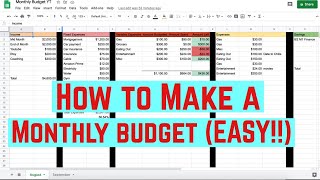
Build a simple monthly expense tracker in Google Sheets with categories, a running total and a monthly summary. It suits anyone who wants to log spending by hand without buying a template. You only need a free Google account and a few minutes to set up the sheet.
YouTube video: Make Your Own Monthly Expense Tracker Spreadsheet In Google Sheets a Step-by-Step Tutorial
Caption availability is unknown. Check the CC control in the YouTube player.
- Video length
- 37 min 47 s
- Time to do it
- 20 minutes
- Difficulty
- Easy
- Steps
- 8
What you need
Steps
Open Google Sheets and create a blank spreadsheet. Name it Monthly Expense Tracker and add a second tab called Summary for totals.
In row 1 of the first tab, type these headers across columns A to E: Date, Description, Category, Amount, Notes.
In column C, list your categories on a second sheet or in a dropdown. Use Data, then Data validation, to make a dropdown list for the Category column.
Format the Amount column as currency. Select column D, open Format, Number, then Currency.
Enter each expense as a new row: date, what you bought, the category and the amount. Keep one row per purchase.
Add a total at the bottom with =SUM(D2:D100). Put it below your rows so it grows as you add entries.
On the Summary tab, use =SUMIF to total each category. For example, =SUMIF(Sheet1!C:C,"Food",Sheet1!D:D).
Add a monthly total with =SUM of the category totals, then compare it to your income to see what is left.
Tips and common mistakes
Log expenses the same day so you do not forget small purchases.
Leave a few blank rows before the total so new entries stay inside the sum range.
Use Data validation for categories to keep spelling consistent and totals correct.
Freeze the header row with View, Freeze, 1 row so labels stay visible as you scroll.
Questions
Do I need to pay for a template?
No. You can build the tracker yourself in a free Google Sheets file. Paid templates only save setup time.
Can I use this for a small business?
Yes. Add a column for payment method or client, and keep business and personal expenses in separate files.
How do I see spending by category?
Use SUMIF formulas on a summary tab, or select your data and insert a chart to compare categories.
The notes are drafted automatically from video details and general task knowledge. How the guide was prepared
Report a correction