The 3 Laws of brake bleeding, by Mapdec Cycle Works on YouTube. 13 min 1 s.
- Video length
- 13 min 1 s
- Time to do it
- 45 minutes
- Difficulty
- Medium
- Steps
- 8
What you need
Steps
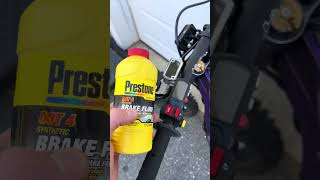
Check which fluid your brakes use before you open anything. Shimano and most Tektro systems take mineral oil, while SRAM and Hope use DOT fluid. The two must never be mixed.
Take out the wheel, lift out the brake pads and slide a bleed block into the caliper. This holds the pistons in place and stops fluid escaping when you open the system.
Level the brake lever so the reservoir port sits flat, then fit the funnel on the lever and the syringe on the caliper, following your bleed kit's layout.
Push fresh fluid slowly from the caliper syringe up to the lever. Air is lighter than fluid, so pushing upward carries bubbles with it instead of trapping them in the hose.
Tap along the hose and caliper with a screwdriver handle as you push. Bubbles cling to the walls in high spots, and the taps knock them loose so they rise to the funnel.
Close the caliper port, then work the lever slowly and watch for bubbles rising in the funnel. Repeat the push and pull cycle until no more air appears.
Close the lever port, wipe everything clean and squeeze the lever hard. Look for fluid weeping at the hose fittings and caliper. A firm lever that holds pressure means the job is done.
Refit the pads and wheel, spin the wheel and check the rotor runs clear of the pads. Squeeze the lever a few times to reset the pistons, then bed the pads in with ten hard stops.
Tips and common mistakes
Never reuse fluid that has been through a bleed, and throw away DOT fluid from an opened bottle after a few months.
Watch the funnel level the whole time. If the reservoir runs dry you pull fresh air straight into the lever.
Cover the frame and floor with rags. DOT fluid strips paint, and mineral oil ruins brake pads if it soaks in.
If the lever still feels spongy after two full bleeds, check for a worn hose seal or a leak at the caliper.
Questions
How do I know if my brakes need bleeding?
A lever that pulls close to the bar, feels spongy or fades on long descents usually means air in the system. If the lever is firm but the bike stops poorly, the pads or rotor are the problem instead.
Can I use car brake fluid in my bike brakes?
Only if your brakes are designed for DOT fluid, and even then use fresh fluid from a sealed bottle. Never put DOT fluid in a mineral oil system such as Shimano, because the seals will swell and fail.
How often should hydraulic brakes be bled?
Most riders bleed once a year, or whenever the lever feel changes. Bikes used in wet, muddy conditions or stored upside down may need it more often.
This guide was drafted from the video's details and general task knowledge. It has not been checked against the full video. Check the video and relevant product instructions before following a procedure. Report a correction.