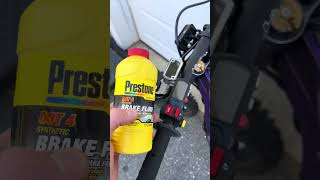
Hydraulic Brake Set Up, by Barry Nobles on YouTube. 3 min 1 s.
- Video length
- 3 min 1 s
- Time to do it
- 20 minutes
- Difficulty
- Medium
- Steps
- 8
What you need
Steps
Clean the rotor with isopropyl alcohol and a clean rag, then fit it to the hub with the correct bolts. Tighten them evenly to the maker's torque, usually about 6 Nm.
Slide the caliper and adaptor onto the frame or fork mounts with the bolts just loose enough to let the caliper move side to side.
Refit the wheel and check the rotor sits inside the caliper slot. Make sure the wheel is fully seated in the dropouts before you align anything.
Squeeze the brake lever firmly and hold it. With the pads clamped on the rotor, tighten the caliper bolts evenly in small steps.
Release the lever and spin the wheel. Look through the caliper slot and nudge it until the rotor runs centred with equal gap on both sides.
Set the lever reach so your index finger can pull it without hitting the bar. If the lever has bite point adjustment, set it after the caliper is centred.
Check the hose routing and all fittings. Pull the lever hard and look for leaks or a spongy feel. If it feels soft, bleed the brake as the maker describes.
Bed in new pads with several moderate stops from walking pace, then a few harder stops. Keep speed low until the brake bites strongly.
Tips and common mistakes
Never let oil, grease or brake fluid touch the pads or rotor; contaminated pads may need replacing.
Tighten caliper bolts a little at a time and check the gap after each turn.
If the rotor still rubs, check the wheel is straight and the rotor is not bent before moving the caliper.
Wear gloves and eye protection when handling hydraulic fluid, and test the brakes at low speed first.
Questions
Do I need to bleed new hydraulic brakes after fitting them?
Not always. Bleed only if the lever feels spongy, pulls to the bar or the hose has been opened. Follow the maker's fluid and bleed kit.
Why does my disc rub after setup?
The caliper is probably off centre or the rotor is slightly bent. Re-centre the caliper first, then check the rotor for runout.
How tight should the rotor bolts be?
Use the brake maker's torque figure, commonly around 6 Nm. Tighten in a star pattern and do not overtighten.
This guide was drafted from the video's details and general task knowledge. It has not been checked against the full video. Check the video and relevant product instructions before following a procedure. Report a correction.