How to Write a Good Lab Report | Step-by-Step Guide, by Lib Academy - With Adam on YouTube. 30 min 40 s.
- Video length
- 30 min 40 s
- Time to do it
- 2 hours
- Difficulty
- Easy
- Steps
- 8
What you need
Steps
Read the marking rubric and lab manual before you write anything. Note the required sections, word limit, referencing style and how many marks each part carries, then plan your time around the heaviest sections.
Write the title and introduction. Give the experiment a clear descriptive title, state the aim, your hypothesis, and the theory behind it, and define any key terms a reader would need.
Describe your method in the past tense. List the equipment and amounts you used, the temperatures or concentrations, and each step in order, so someone else could repeat the experiment.
Present your results in tables and graphs. Label every axis with its quantity and unit, add a caption to each table and figure, and keep the raw data out of the main text if the rubric asks for an appendix.
Write the discussion. Describe the trend in your data, compare it with the expected theory or textbook value, and explain any anomalies and sources of error.
Write the conclusion in two or three sentences. Answer the aim directly, say whether your hypothesis was supported, and give your final value with its uncertainty if you have one.
Add your references in the required style. Cite the lab manual, textbook and any papers you used, and check that every in-text citation appears in the reference list.
Proofread the whole report. Check units, significant figures, headings, spelling and that every table and figure is mentioned somewhere in the text before you submit.
Tips and common mistakes
Write the method and results section during or straight after the practical, while the details are fresh.
Keep results and discussion separate: save the explanation of what the data means for the discussion section.
Say whether an error was a random or a systematic one, and suggest one realistic improvement to the method.
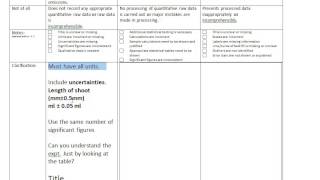
Match the number of significant figures in your final answer to the precision of your measuring equipment.
Questions
Should a lab report be written in the past tense?
The method and results are usually written in the past tense because the work has already happened. The introduction and discussion can mix tenses, but stay consistent within each section.
What if my results do not match the expected values?
Report them honestly and explain why in the discussion. A clear analysis of unexpected data usually earns more marks than data that looks too perfect.
How long should a lab report be?
Follow the length your rubric or lecturer sets, which is often 3 to 6 pages for a first-year practical. The marks come from clear sections and correct analysis, not from extra words.
This guide was drafted from the video's details and general task knowledge. It has not been checked against the full video. Check the video and relevant product instructions before following a procedure. Report a correction.