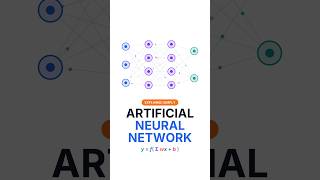
This guide walks you through the core ideas behind deep learning in a sensible order, from what AI and machine learning mean to how a single neuron computes and how a network learns. It suits complete beginners, students and programmers who want the concepts clear before writing any code. No maths background or software is required to start.
YouTube video: Deep Learning Introduction for Beginners | Neural Networks, AI & PyTorch Roadmap
YouTube’s video details do not confirm captions. Check CC in the player for available tracks.
- Video length
- 9 min 35 s
- Time to do it
- 45 minutes
- Difficulty
- Easy
- Steps
- 8
What you need
Steps
Sort out the three terms first. Artificial intelligence is the whole field, machine learning is the part that learns patterns from data, and deep learning is machine learning built on neural networks with many layers.
Learn what a neuron does. It takes in numbers, multiplies each one by a weight, adds a bias, then passes the total through an activation function to produce an output.
Draw the structure of a network. Neurons sit in layers: an input layer that receives your data, one or more hidden layers, and an output layer that gives the answer.
Understand weights and bias in plain words. A weight says how much an input matters, and the bias shifts the result so a neuron can still activate when all inputs are zero.
Memorise two or three activation functions. ReLU is common in hidden layers because it is simple, while sigmoid and softmax are used at the output for probabilities.
Learn how training works. The network makes a guess, a loss function measures how wrong it is, and backpropagation nudges every weight and bias to make the loss smaller. Repeat over many examples.
Note the main architectures and what each suits. ANN for plain tabular data, CNN for images, RNN, GRU and LSTM for sequences, and Transformers for text and long-range patterns.
Build one tiny network in PyTorch once the ideas feel solid. Define a layer, run a forward pass, compute the loss and call the optimizer step to see the weights change.
Tips and common mistakes
Read the concept first and run code second, or the syntax will hide what is actually happening.
Work one small example by hand, a neuron with two inputs, so you see how weights and bias change the output.
Expect to revisit the maths later. You do not need calculus to grasp the intuition of gradient descent.
Sketch each idea as a diagram. Drawing layers and arrows makes backpropagation far easier to remember.
Questions
Do I need maths or coding before starting?
No. You can learn the concepts of neurons, weights and activation functions with basic arithmetic. Coding comes later, once the ideas are clear.
What is the difference between machine learning and deep learning?
Machine learning covers any method that learns from data, including simple models like decision trees. Deep learning is a subset that uses neural networks with many layers.
Which architecture should I learn first?
Start with a plain feedforward network, the ANN. It teaches layers, weights and training, and everything else builds on that foundation.
The notes are drafted automatically from video details and general task knowledge. How the guide was prepared
Report a correction