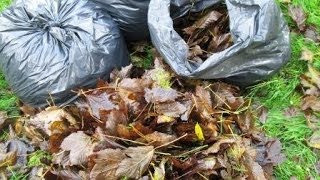
Fall leaves are free soil food, not a fertilizer. This guide shows you how to spread them as mulch, dig them into empty beds, pack them into leaf mold and compost the rest, so nothing goes to the curb. It suits any gardener with a few trees and a rake.
YouTube video: Stop Bagging Your Leaves: How to Turn Them Into Better Soil
YouTube’s video details do not confirm captions. Check CC in the player for available tracks.
Choose a chapter (11)
- Video length
- 8 min 2 s
- Time to do it
- 1 hour
- Difficulty
- Easy
- Steps
- 9
What you need
Steps
Rake dry leaves onto a tarp instead of bagging them at the curb. Keep the pile dry and covered until you use it, because wet leaves mat down and break down slowly.
Spread 2 to 4 in of whole or shredded leaves as mulch around trees, shrubs and beds. Leave a small gap around stems and trunks so they stay dry.
Pile extra leaves over root crops still in the ground to shield them from late-fall freezes. Pull the leaves back to harvest, then put them back.
On empty beds, dig leaves into the top 6 to 8 in of soil in fall. Do this weeks before planting, never right before sowing, or the leaves tie up nitrogen as they rot.
For a 4 by 8 ft bed, aim for a 6 to 8 in layer of loose leaves before digging in. It settles to a thin layer as it decays, so do not skimp.
To make leaf mold, shred leaves with a mower and pack them into a wire bin or tied black bag. Keep them damp. Shredded leaves take about 6 months, whole leaves 9 to 12 months.
Add leaves to your compost pile as browns. Layer them with green material like grass clippings or kitchen scraps and keep the pile as damp as a wrung-out sponge.
Ignore the myths. Oak leaves barely shift soil pH once broken down, and leaves are a soil builder rather than a fertilizer, so keep feeding your beds.
Cover next year's tomato bed with a thick layer of leaves in fall. Rake it aside in spring, plant into the softened soil, then use the leaves as mulch between plants.
Tips and common mistakes
Run a mower over the leaves first. Shredded leaves break down far faster and do not mat into a soggy sheet.
Do not dig fresh leaves in right before planting, or young seedlings may yellow from nitrogen being locked up.
Black walnut leaves are fine in a compost pile, but keep fresh ones out of mulch around sensitive plants.
Leaf mold can be used to make a JADAM Microbial Solution, a low-cost Korean natural farming input, but research on the yield claims is still limited.
Questions
Will oak leaves make my soil too acidic?
In practice, no. Soil pH barely moves as oak leaves break down, and they make a good free mulch. Test your soil if you are worried.
How long do leaves take to break down?
Shredded leaves in a damp pile turn into leaf mold in about 6 months. Whole leaves usually take 9 to 12 months.
Can I use leaves instead of fertilizer?
No. Leaves feed soil life and improve structure but they are low in nutrients, so keep fertilizing and treat leaves as a soil builder.
The notes are drafted automatically from video details and general task knowledge. How the guide was prepared
Report a correction