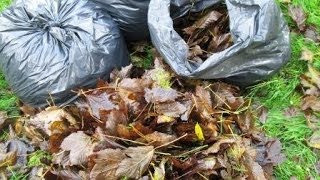
Leaf mold is decayed leaves that you can use as a free soil amendment instead of peat moss or coir. This guide suits any gardener with fallen leaves and a few bin bags. You only need leaves, bags and a little patience, since it takes months to break down.
YouTube video: How to Make Leaf Mold EASY Guide
YouTube’s video details do not confirm captions. Check CC in the player for available tracks.
Choose a chapter (10)
- Video length
- 4 min 54 s
- Time to do it
- 20 minutes
- Difficulty
- Easy
- Steps
- 8
What you need
Steps
Collect fallen leaves from your lawn or paths. Skip thick evergreen leaves and use thin, easy-to-rot leaves like maple or oak.
Choose a container. A bin bag works for small batches, while a wire bin or wooden frame holds more and lets air in.
Fill the bag or bin with leaves, leaving some room. Do not pack them too tight.
Add water so the leaves are damp but not soaked. Squeeze a handful to check.
Tie the bag loosely or cover the bin. Punch a few holes in a plastic bag so air can get in.
Store the bag or bin in a shady spot. Turn or shake the leaves every few weeks to speed things up.
Check after several months. The leaf mold is ready when the leaves are soft, crumbly and dark, with no whole leaf shapes left.
Dig the finished leaf mold into garden soil or spread it as mulch around flower beds and vegetables.
Tips and common mistakes
Leaf mold is not the same as compost. It breaks down slowly by fungal action, so expect it to take many months.
Keep the leaves damp. Dry leaves stall and take far longer to break down.
Do not add food scraps or green waste to the bag, since that turns it into compost instead.
Questions
How long does leaf mold take?
Usually many months, often a year or more. Turning the leaves and keeping them damp helps them break down faster.
Can I use any leaves?
Thin leaves like maple and oak work best. Thick evergreen leaves break down very slowly and are better left out.
What can I use leaf mold for?
Use it as a soil amendment, mulch or a substitute for peat moss and coconut coir in beds and vegetable gardens.
The notes are drafted automatically from video details and general task knowledge. How the guide was prepared
Report a correction