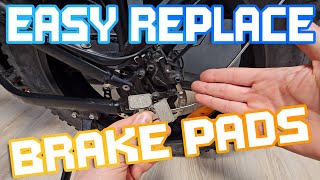
How to True a Bicycle Disc Brake Rotor, by Park Tool on YouTube. 10 min 56 s.
- Video length
- 10 min 56 s
- Time to do it
- 15 minutes
- Difficulty
- Easy
- Steps
- 9
What you need
Steps
Put the bike in a stand or flip it so the wheel with the rotor spins freely. Remove the wheel if your stand makes that easier.
Spin the wheel and watch the rotor where it passes through the brake caliper. Note the spot where it wobbles and rubs the pads.
Hold a bright flashlight behind the caliper or slide white paper behind it. The gap between rotor and pad becomes easy to see.
Mark the bent area with a piece of tape on the rotor or note its position relative to a spoke. Stop the wheel with the bend at the caliper.
Fit the truing fork or small wrench over the rotor at the bend. Keep it away from the braking surface so you do not scratch it.
Bend the rotor gently toward the opposite side of the rub. Use small pressure, release, spin and check again.
Repeat in small adjustments until the rotor spins without touching the pads. Work slowly, since rotors bend easily.
Spin the wheel a final time and squeeze the brake lever a few times. Listen for rub and check the lever feels firm.
Clean the rotor with a rag and brake cleaner if you touched the braking surface. Oily fingerprints cause squealing and poor braking.
Tips and common mistakes
Bend in tiny amounts and recheck after each push. Overbending makes the wobble worse.
Never touch the braking surface with bare fingers. Oils from your skin reduce braking power.
If the rotor stays bent after a few tries or is deeply creased, replace it instead of straightening it.
On the trail, a small adjustable wrench or a dedicated rescue tool works in place of a truing fork.
Questions
Can I true a rotor without a truing fork?
Yes. A small adjustable wrench or a trail multi-tool with a rotor slot works. Grip the rotor gently and bend in small steps.
How do I know if the rotor is bent or the caliper is misaligned?
Spin the wheel and watch the rotor. If the same spot rubs every turn, the rotor is bent. If the whole rotor sits too close to one pad, the caliper needs aligning.
Will a bent rotor damage my brakes?
A slight bend mainly causes rub and noise. A badly bent rotor can wear pads unevenly and reduce braking, so fix it or replace it soon.
This guide was drafted from the video's details and general task knowledge. It has not been checked against the full video. Check the video and relevant product instructions before following a procedure. Report a correction.