How To Take Smart Notes (3 methods no one's talking about), by Vicky Zhao on YouTube. 7 min 14 s.
- Video length
- 7 min 14 s
- Time to do it
- 20 minutes
- Difficulty
- Easy
- Steps
- 7
What you need
Steps
Before you start reading or listening, write down what you already know and what you want to find out. This gives your brain a question to hang new ideas on.
Take active notes by turning each key point into a question and writing the answer in your own words. Use the Q/E/C pattern: question, evidence, conclusion.
Keep each note focused on one idea only. Give it a short title that states the idea, so you can find it later without rereading the whole page.
Write the note as a full sentence in your own words, as if explaining it to someone else. If you cannot, you do not understand it yet.
Link each new note to at least one existing note and say why they connect. Connected notes build a map of ideas instead of a pile of pages.
Use the compass of Zettelkasten thinking to place the idea: ask what it is, what it is like, what it is part of and what it is not.
Review your notes at the end of the week and merge or split anything that has grown messy. Spend five minutes a day on this rather than one long catch-up.
Tips and common mistakes
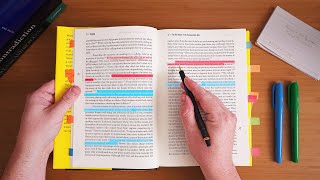
Do not highlight or copy text. Rewriting the idea in your own words is what makes it stick.
One idea per note keeps links clear. Long notes with five topics are hard to connect.
Link notes as you write them, not later. The reason for the link is easy to forget.
If a note has no links after a week, either it is not useful or you have not found its place yet.
Questions
Do I need an app like Obsidian to take smart notes?
No. Paper index cards or a notebook work fine. An app just makes linking and searching faster once you have many notes.
How many notes should I write from one lecture?
Aim for a handful of atomic notes covering the main ideas, not one note per slide. Quality and links matter more than volume.
What is the Q/E/C method?
It means question, evidence, conclusion. You write the question the idea answers, the evidence behind it and the conclusion you draw.
This guide was drafted from the video's details and general task knowledge. It has not been checked against the full video. Check the video and relevant product instructions before following a procedure. Report a correction.