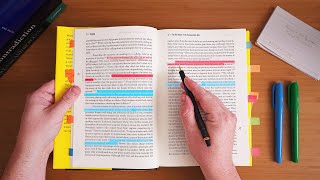
The Surprising Truth About Note-taking During Lectures, by Benjamin Keep, PhD, JD on YouTube. 8 min 48 s.
- Video length
- 8 min 48 s
- Time to do it
- 30 minutes
- Difficulty
- Easy
- Steps
- 8
What you need
Steps
Before the lecture starts, open a fresh page and write the date, the topic and any headings from the reading. Leave the rest of the page blank.
During the lecture, note only what you could not rebuild later: key terms, definitions, worked examples, and anything the lecturer repeats or stresses. Keep it short.
Do not try to type a word-for-word transcript. Verbatim notes feel thorough but leave little attention free for understanding the ideas.
Within a day of the lecture, close your notes and write everything you can recall on a blank page. This free recall is the part that builds memory.
Open your lecture notes and compare. Mark what you missed in a second colour and rewrite those points in your own words.
Turn each gap into a question, such as what are the three stages of this process, and answer it from memory before checking.
Repeat the blank page recall a day later and again a week later. Check your notes only after you have written everything you can.
If you cannot keep up in the lecture, take notes afterwards from the slides or recording instead. Studies found little difference between notes taken during and after.
Tips and common mistakes
Rereading your notes is the weakest use of them; test yourself first and check the notes afterwards.
Handwriting and typing show mixed results, so pick whichever keeps you focused and off other tabs.
Keep lecture notes sparse on purpose, since fewer cues force you to rebuild the meaning.
Sit where you can hear and see the slides clearly, because attention matters more than writing speed.
Questions
Should I take notes during the lecture or after it?
Either can work. Research comparing the two found little difference in results, so choose whichever keeps your attention on the explanation.
Are handwritten notes better than laptop notes?
The evidence is mixed. Typing can produce fuller notes but also more distraction, so use whichever you can stay focused with.
Why write everything from memory instead of just reviewing notes?
Pulling information out of memory strengthens it more than rereading it. The recall page also shows you what you do not yet know.
This guide was drafted from the video's details and general task knowledge. It has not been checked against the full video. Check the video and relevant product instructions before following a procedure. Report a correction.