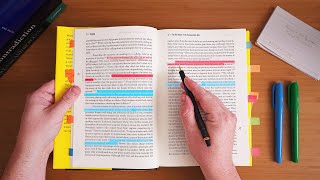
How To Get The Most Out of A Book - Analytical Reading 101, by Robin Waldun on YouTube. 6 min 39 s.
- Video length
- 6 min 39 s
- Time to do it
- 30 minutes per chapter
- Difficulty
- Easy
- Steps
- 8
What you need
Steps
Read the chapter once without marking anything. Your only job on this pass is to work out the shape of the argument and where it is going.
Go back through the chapter and underline only the sentences that carry the main claim. Aim for a few lines per page, not whole paragraphs.
Write a short note in the margin beside each underlined passage, in your own words. If you cannot paraphrase it, you have not understood it yet.
Pick a small set of symbols and keep them consistent, such as a star for key terms, a question mark for confusion and an exclamation mark for a claim you doubt.
Write your objections and questions in the margin as they come up. Argue with the author instead of just accepting every sentence.
At the end of the chapter, write three or four sentences summarising what it said on the inside back cover or a note card.
Flag the pages with the strongest passages using sticky notes, so you can find them again without rereading the whole book.
When you finish the book, reread your margin notes and chapter summaries, then write one page on what the book argued and whether you were convinced.
Tips and common mistakes
Use a pencil rather than a highlighter, so you can erase a note you later disagree with.
Underlining everything marks nothing. If a whole page is underlined, you have not decided what matters.
Keep your symbol key on the first page of the book so you remember what each mark means weeks later.
Questions
Do I need to write in the book itself?
It works best on a copy you own. If the book belongs to a library or a friend, use sticky notes and flags instead and keep your notes in a separate notebook.
How is this different from normal reading?
Normal reading moves forward at one speed. Analytical reading means a fast pass for the shape of the argument, then a slower pass where you underline, question and summarise.
What if I still forget the book after a few months?
Reread only your chapter summaries and margin notes. That takes minutes and usually brings back the argument faster than starting the book again.
This guide was drafted from the video's details and general task knowledge. It has not been checked against the full video. Check the video and relevant product instructions before following a procedure. Report a correction.