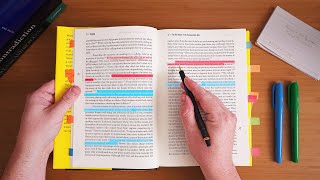
My Simple French Note-Taking System for Beginners, by iam_juju on YouTube. 9 min 21 s.
- Video length
- 9 min 21 s
- Time to do it
- 30 minutes per chapter
- Difficulty
- Easy
- Steps
- 7
What you need
Steps
Pick three places for your notes: a digital app for the long notes, a paper notebook for short summaries and flashcards for words. Give each tool one job so you always know where to look.
Read one textbook chapter and mark three kinds of content: new words, grammar points and example sentences. Sort them before you write anything so your notes follow the same order as the chapter.
Write the full notes in your digital app first. For each word, copy the term, its meaning, its gender or part of speech and one example sentence taken from the chapter.
Condense the chapter into one handwritten page in your notebook. Keep only the words and grammar you keep forgetting, plus two or three model sentences you can copy later.
Turn each hard word into a paper flashcard. Put the foreign word on the front and the meaning plus a short example sentence on the back, and write them yourself rather than printing them.
Review the flashcards in short daily sessions of five to ten minutes. Say the answer out loud before you turn the card over, then put the cards you knew in a separate pile.
Re-read your one-page summary once a week and add any mistakes you made in class or in homework. Drop the cards you already know so the pile stays small.
Tips and common mistakes
Write notes in your own words where you can, because copying whole sentences from the book does not help you remember them.
Keep one notebook page per chapter and date it, so revision later is quick to find.
Do not add a fourth tool mid-course. Three places for notes is enough for a beginner.
Review old flashcards alongside new ones, otherwise the early vocabulary fades.
Questions
Do I need a traveler's notebook for this system?
No. Any small notebook works, as long as you keep one page or one section per chapter. The point is a short handwritten summary you can flip through fast.
Should I type the notes or write them by hand?
Do the long notes digitally so they are easy to search and edit, then write the short summary by hand. The handwriting step forces you to cut the chapter down to what matters.
How often should I review the flashcards?
Daily, in short bursts of five to ten minutes, is better than one long session each week. Set aside the cards you know and focus on the ones you miss.
This guide was drafted from the video's details and general task knowledge. It has not been checked against the full video. Check the video and relevant product instructions before following a procedure. Report a correction.