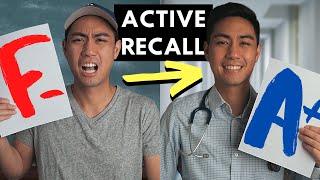
This guide sets up a four-part study system so you learn complex material quickly and walk into the exam calmer. It suits students revising for school or university exams who want to replace highlighting and re-reading with active methods. You only need your notes, the syllabus and some past papers to start.
YouTube video: How to Study for Exams Fast, Memorise Everything and STOP PANICKING / The ACADEMIC glow up ep.2
Caption availability is unknown. Check the CC control in the YouTube player.
Choose a chapter (6)
- Video length
- 17 min 39 s
- Time to do it
- 1 hour to set up
- Difficulty
- Easy
- Steps
- 10
What you need
Steps
Stop hunting for new study hacks each exam season. Pick one system, run it for a full exam cycle, and only change it after you have real results.
In class, capture actively instead of typing every word. Write short cues and questions in the margin, then summarise each section in your own words right after the lecture.
Do a first pass the same day, while the material is fresh. Close your notes, write down everything you remember on blank paper, then reopen them and fill the gaps in a different colour.
Turn each heading into a question and answer it out loud without looking. Mark the ones you get wrong and test only those again.
Build a revision matrix: list topics down one side and review dates across the top. Tick each cell only when you can explain the topic from memory.
Space your passes instead of cramming once. Review a topic roughly one day, three days and one week after you first learn it, then again before the exam.
Sit past papers or practice questions under timed conditions. Mark them honestly and turn every wrong answer into a flashcard or a question in your matrix.
Plan the last 24 hours in advance. Pack your bag, check the exam time and room, review only your marked weak spots, and stop adding new material.
If panic hits, put your pen down and breathe slowly in for four counts, hold for four, out for four. Name the next single question you will answer and start there.
After the exam, note which parts of the system worked and which topics you still blanked on. Adjust one thing before the next round.
Tips and common mistakes
Testing yourself from memory beats re-reading and highlighting, which feel productive but leave little behind.
Keep review sessions short and frequent rather than one long block, so recall stays effortful.
Explain a hard topic out loud as if teaching a friend. The places you stumble are the places to revise.
Protect seven to eight hours of sleep before an exam. Tired recall is slower and shakier.
Questions
How far ahead should I start revising?
Give yourself enough time for at least three spaced passes over each topic, which usually means starting two to three weeks before the exam. Shorter deadlines still work if you space the passes across days rather than hours.
What if I have too many topics and not enough time?
Rank topics by how often they appear in past papers and how weak you are on them. Spend your limited passes on the high-frequency, low-confidence topics first.
Does this work for essay subjects, not just science?
Yes. Use the same recall and spacing pattern, but practise writing full essay plans and timed paragraphs instead of short answers.
The notes are drafted automatically from video details and general task knowledge. How the guide was prepared
Report a correction