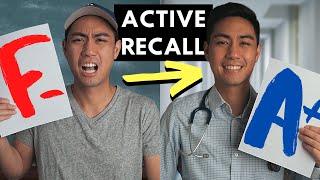
Active recall means testing yourself on material instead of rereading it. This guide shows how to turn your notes into questions and quiz yourself in short sessions. It suits students preparing for school, college or competitive exams who already have notes or a textbook to work from.
YouTube video: How to study WELL for exams - Active Recall - Best study Technique MBBS
YouTube’s video details do not confirm captions. Check CC in the player for available tracks.
Other videos for this task
- How to revise for exams using active recall 13:55 · 7 written steps
- How to revise for exams using active recall 20:59 · 7 written steps
- How to revise for exams using active recall 5:41 · 6 written steps
- Video length
- 5 min 42 s
- Time to do it
- 20 minutes
- Difficulty
- Easy
- Steps
- 6
What you need
Steps
Close your notes and write down everything you already remember about the topic on a blank sheet. This shows you where the gaps are before you start.
Open your notes and turn each heading or key point into a question, such as "What are the three stages of cell division?"
Write the answer on the back of the card or below the question, keeping it short and in your own words.
Cover the answers and work through the questions one by one, saying each answer out loud before you check it.
Mark every question you got wrong and review only those again after a short break.
Repeat the same question set after one day, then after three days, then after a week to lock it into long-term memory.
Tips and common mistakes
Rereading and highlighting feel productive but do little for memory, so spend most of your time testing yourself instead.
Keep each session short and take a break between rounds so you stay focused.
Say answers out loud or write them from memory rather than just recognising the right answer.
Questions
What is active recall?
It is a study method where you pull information from memory by testing yourself, instead of passively reading or highlighting notes. Each attempt to remember strengthens the memory.
How often should I review?
Space your reviews out: once the same day, again after a day, then after three days and a week. Short, repeated sessions beat one long cram.
Does this work for any subject?
Yes. It works best for facts, definitions and processes, so turn diagrams and lists into questions too.
The notes are drafted automatically from video details and general task knowledge. How the guide was prepared
Report a correction