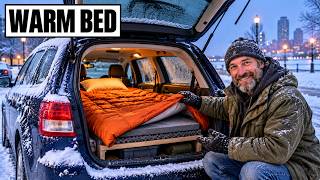
How to Stay Warm in a Sleeping Bag—7 Fixes That Work!, by Matt Kessler - Revelo on YouTube. 16 min 27 s.
- Video length
- 16 min 27 s
- Time to do it
- 20 minutes
- Difficulty
- Easy
- Steps
- 8
What you need
Steps
Check your bag's comfort rating, not just its lower limit, and match it to the coldest temperature you expect at night.
Pick a sleeping pad with enough R-value for the ground temperature. A warm bag cannot make up for a cold pad.
Before bed, change out of sweaty clothes into dry base layers and wool socks. Damp clothing pulls heat away from your body.
Put on a dry beanie and pull up the sleeping bag hood. Keep your head covered all night, not just when you first lie down.
Fill empty space around your feet and legs with dry clothing. Do not pack the bag so tightly that the insulation cannot loft.
Seal the bag around your shoulders to block drafts. If the bag feels damp, vent it briefly before bed and keep wet gear outside.
If the ground feels cold, add emergency insulation under your pad. Use a foam mat, dry backpack, or extra dry layers.
Eat a calorie-rich snack before bed, such as nuts or a granola bar. This gives your body fuel to produce heat overnight.
Tips and common mistakes
Temperature ratings assume you use a suitable pad and dry layers, so treat them as a guide, not a guarantee.
Never wear damp socks or base layers inside your bag; moisture reduces the insulation's ability to trap heat.
If you shiver uncontrollably, feel confused, or cannot get warm, treat it as hypothermia and get help.
A pad with an R-value around 4 or higher is a common choice for freezing nights; check the pad's rating for snow.
Questions
Why am I still cold in a sleeping bag rated for the temperature?
Ratings assume you use a suitable pad, dry layers, and a warm hat. Cold ground, damp clothing, and a loose fit can all make a rated bag feel much colder.
Should I wear a puffy jacket inside my sleeping bag?
A dry puffy jacket can add warmth, especially around your core. Avoid wearing so many layers that the bag's insulation gets compressed.
What R-value sleeping pad do I need for winter camping?
Many winter campers look for an R-value of 5 or higher. At minimum, use a pad rated for the ground temperatures you expect.
This guide was drafted from the video's details and general task knowledge. It has not been checked against the full video. Check the video and relevant product instructions before following a procedure. Report a correction.