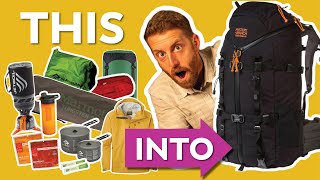
You will cut the weight of your hiking pack by weighing every item and deciding what stays home. It suits beginner and intermediate backpackers who want a lighter load without buying all new gear. A kitchen scale and a simple gear list are all you need to start.
YouTube video: 5 Tips EVERY BACKPACKER Should Know To SHAVE PACK WEIGHT
Caption availability is unknown. Check the CC control in the YouTube player.
- Video length
- 1 min
- Time to do it
- 2 hours
- Difficulty
- Easy
- Steps
- 9
What you need
Steps
Weigh your loaded pack, then weigh each item one by one on a kitchen scale. Write every number in a spreadsheet or notebook so you can see where the grams sit.
Sort your gear into three piles: essentials, nice to haves, and things you never used on your last trip. The third pile usually goes home.
Attack the big three first: shelter, sleep system and the pack itself. Swapping a heavy tent, synthetic sleeping bag or bulky pack saves more than trimming small items.
Set a base weight target, such as 10 to 15 pounds (4.5 to 7 kg) without food and water. Check your list against it and trim until you get close.
Repackage food into zip top bags and remove cardboard and cans. Aim for calorie dense food around 100 to 125 calories per ounce.
Decant toiletries and sunscreen into small bottles and take only a few doses of each medicine. Leave the full size bottles and the extra towel at home.
Carry only the water you need between refills and check the map for sources along the way. A litre of water weighs about 1 kg (2.2 lb).
Split shared gear with your hiking partner. One stove, one tent and one filter between two people can remove several pounds from each pack.
Keep your safety gear. Insulation, rain shell, headlamp, first aid and navigation stay in the pack no matter what the scale says.
Tips and common mistakes
Weigh items in grams rather than ounces, since small savings are easier to see and add up faster.
Never cut safety gear to hit a number. A lighter pack is not worth hypothermia or a dead headlamp.
If you have not used an item on your last three trips, leave it at home next time.
Weigh your pack before and after each trip to learn what you actually carried and never touched.
Questions
How light should my base weight be?
Many three season backpackers aim for 10 to 15 pounds (4.5 to 7 kg) without food and water. Get comfortable with your current load first, then trim a bit each trip.
What is the cheapest way to lose pack weight?
Carry less rather than buy new gear. Repackaging food, taking less water and leaving unused items at home cost nothing.
Should I cut straps and tags off my pack?
Only after you have tested the fit on a real hike. Trimming saves a few grams but voids resale value and cannot be undone.
The notes are drafted automatically from video details and general task knowledge. How the guide was prepared
Report a correction