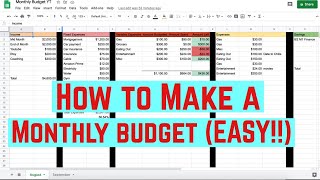
This guide walks you through building a monthly budget you can actually stick to, using cash envelopes for day to day spending and sinking funds for bills that only turn up a few times a year. It suits anyone who wants a simple, hands on system instead of an app. You will need last month's bank statements and a set of envelopes.
YouTube video: ✨ June 2026 Budget With Me | Monthly Budget Setup, Cash Budgeting & Saving Goals
Caption availability is unknown. Check the CC control in the YouTube player.
- Video length
- 25 min 39 s
- Time to do it
- 45 minutes
- Difficulty
- Easy
- Steps
- 8
What you need
Steps
List every fixed bill for the month: rent or mortgage, utilities, phone, insurance, subscriptions and loan payments. Write the amount and the due date next to each one.
Add up the income you expect, using the lowest reliable figure. If a payment might arrive late, plan without it so the budget still balances.
Build your spending categories such as housing, food, transport, debt and fun. Give each one an amount until income minus everything you have assigned reaches zero.
Set up sinking funds for costs that come a few times a year, like car repairs, car tax, birthdays and holidays. Divide each yearly cost by 12 and set that amount aside every month.
Work out what one week of variable spending costs, for example groceries, fuel and eating out. Withdraw that amount in cash and split it into labelled envelopes.
Spend only from the envelope for that category. When it is empty, stop spending there until the next refill rather than reaching for a card.
Put any leftover cash and extra income into a one month ahead fund. Keep going until you have a full month of expenses saved, then budget next month's income from it.
Check the budget once a week. Note where you overspent, move money from a lower priority category, and adjust next month's amounts.
Tips and common mistakes
Budget with your lowest expected income so a short month does not break the plan.
Keep sinking fund money separate from your everyday cash so it does not get spent by accident.
Only carry the envelope you need for the day and leave the rest at home.
Questions
How much cash should I withdraw each week?
Take out only what your budget allows for that week's variable spending, then split it across the envelopes. Start small and raise the amount after a month or two once you see your real spending.
What if an envelope runs out before the week ends?
Stop spending in that category and check your budget for money you can move from a lower priority line. Then lower the weekly amount for next month so it matches reality.
Do I need a spreadsheet?
No. A notebook and paper envelopes work fine. A spreadsheet helps if you want totals to update automatically as you change category amounts.
The notes are drafted automatically from video details and general task knowledge. How the guide was prepared
Report a correction