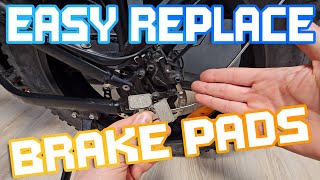
5th Gen Toyota 4Runner Front Brake Pad & Rotor Replacement | Ultimate DIY Guide, by T4R Garage on YouTube. 13 min 42 s.
- Video length
- 13 min 42 s
- Time to do it
- 2 hours
- Difficulty
- Medium
- Steps
- 10
What you need
Steps
Park on level ground, set the parking brake and loosen the front lug nuts a half turn before lifting. Raise the front end and support it on jack stands under the frame.
Remove the lug nuts and pull off both front wheels. Set them aside where they will not roll.
Unbolt the brake caliper from the knuckle and hang it from the coil spring with a caliper hanger. Do not let it dangle by the brake hose.
Remove the caliper bracket bolts, then pull the old rotor straight off the hub. If it is stuck, tap the face with a rubber mallet.
Clean the hub face with a wire brush and brake cleaner so the new rotor sits flat. Wipe the new rotor with brake cleaner to remove the protective oil.
Slide the new rotor onto the hub. Reinstall the caliper bracket and torque the bolts to spec.
Use a C-clamp to push the caliper piston back into the bore. Open the bleeder screw slightly if the fluid reservoir looks full.
Grease the caliper pins and pad backing plates with ceramic brake lubricant. Fit the new pads, shims and anti-rattle clips into the bracket.
Bolt the caliper back on and torque it to spec. Refit the wheels, lower the truck and torque the lug nuts in a star pattern.
Pump the brake pedal until it feels firm before driving. Bed the pads in with several moderate stops from about 40 mph, then let them cool.
Tips and common mistakes
Never let the caliper hang by the brake hose, since it can crack and cause a fluid leak.
Clean the hub surface well or the new rotor will wobble and cause pedal pulsation.
Pump the pedal a few times before moving the truck, because the first press will be long after the piston was pushed back.
Check the brake fluid level after the job and top it up if needed.
Questions
Do I need to bleed the brakes after changing pads?
Usually no. If you only pushed the piston back and did not open the bleeder, the pedal should firm up after a few pumps. Bleed the system if the pedal stays soft or you opened the bleeder screw.
Can I reuse the old rotors?
Only if they are above the minimum thickness and have no deep grooves or rust. New rotors are cheap insurance and give better braking.
What torque should I use on the caliper bolts?
Use the torque specs in your 4Runner service manual. Tighten the caliper bracket and caliper bolts to those values with a torque wrench, not by feel.
This guide was drafted from the video's details and general task knowledge. It has not been checked against the full video. Check the video and relevant product instructions before following a procedure. Report a correction.