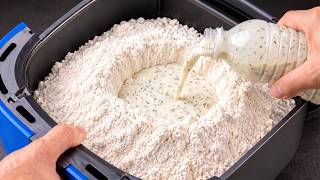
How To Proof Dough Faster In Winter Months, by Katherine "Kae" Sprung on YouTube. 1 min 31 s.
- Video length
- 1 min 31 s
- Time to do it
- 1 to 2 hours
- Difficulty
- Easy
- Steps
- 9
What you need
Steps
Take the flour, bowl and any cold ingredients out early so they reach room temperature. Cold flour slows the rise more than cold air does.
Mix the yeast into liquid that feels just warm on your wrist, about 38°C (100°F). Water hotter than 50°C (120°F) can kill the yeast.
Add 1/4 to 1/2 teaspoon of extra instant yeast to your usual recipe, or 1 teaspoon of sugar or honey to give the yeast a quick food source.
Knead the dough as usual, then shape it into a ball and put it in a lightly oiled bowl that has been rinsed with hot water and dried.
Cover the bowl with oiled plastic wrap or a damp warm towel. A dry tea towel lets a skin form and the dough rises unevenly.
Set the bowl in the warmest draft-free spot in your kitchen, such as the top of the fridge, a shelf above a radiator or an airing cupboard.
For a steady warm box, heat the oven to its lowest setting for 2 minutes, turn it off, and put the covered bowl inside with the door shut.
Or microwave a mug of water for 2 minutes, move the mug to a corner and slide the bowl in beside it. Reheat the mug every 30 minutes.
Check the dough every 20 to 30 minutes. It is ready when it has roughly doubled and a floured finger poked in leaves a hole that springs back slowly.
Tips and common mistakes
Aim for a dough temperature of 24 to 27°C (75 to 80°F). Too hot and the dough rises fast but tastes flat.
Never leave dough in an oven that is still on, and check the oven is off before you walk away.
If the surface looks dry, mist it with water instead of adding more flour.
Extra yeast speeds things up, but a long cool rise gives better flavour, so save the warm method for days when you are short on time.
Questions
How much faster will the dough rise?
Warm dough can rise noticeably faster than dough left in a cold kitchen, so start checking early instead of trusting the clock. Judge by how the dough looks, not by the timer.
Can I use a heating pad or a water bath?
Yes. Wrap the bowl in a towel over a heating pad set to low, or stand it in a larger bowl of warm water and top the water up when it cools.
What if the dough over-proofs?
If it collapses or smells strongly of alcohol, punch it down, reshape it and bake it straight away. Over-proofed dough bakes flatter and denser.
This guide was drafted from the video's details and general task knowledge. It has not been checked against the full video. Check the video and relevant product instructions before following a procedure. Report a correction.