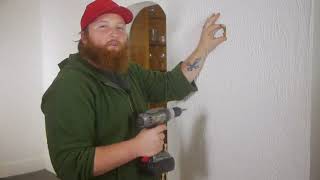
How to Patch Holes in Plaster Walls | This Old House, by This Old House on YouTube. 3 min 37 s.
- Video length
- 3 min 37 s
- Time to do it
- 1 hour, plus drying time
- Difficulty
- Medium
- Steps
- 8
What you need
Steps
Lay a dust sheet down and switch off power to any outlets or switches close to the repair. Plaster dust gets everywhere, so cover nearby furniture with plastic too.
Square up the damage. Use a drywall saw or utility knife to cut the ragged hole into a clean rectangle, keeping the blade shallow so you do not hit wires or pipes.
Measure the opening and cut a piece of drywall or blueboard to fit it. Trim the patch until it sits flush with the face of the wall.
Test the patch in the hole, then drive drywall screws through it into the framing or lath. If there is nothing behind to screw into, fix a wood backer strip behind the wall first.
Press self-adhesive mesh drywall tape over the seams so it lies flat and overlaps the wall on all four sides. Cut the tape with a knife rather than tearing it.
Load joint compound onto a 4 to 6 inch taping knife and press a thin coat through the mesh and over the seams. Feather the edges out, then let it dry.
Apply a second, slightly wider coat with a 10 inch knife once the first is dry. Two or three thin coats hide the repair better than one thick one.
Sand the dry compound with 120 grit paper or a sanding sponge until it sits flush with the wall. Wipe off the dust, then prime the patch and paint the wall.
Tips and common mistakes
Cut the hole square first, because ragged plaster edges are almost impossible to tape neatly.
Keep each coat thin and let it dry fully, or the compound shrinks and cracks.
Feather the compound a few inches past the tape so you do not see a ridge under the paint.
Plaster is harder than drywall, so use a sharp blade and light pressure when trimming.
Questions
Can you patch plaster with regular joint compound?
Yes. All-purpose or setting-type joint compound works on plaster as well as drywall. Plaster is harder and denser, so it takes a bit more sanding to get flush.
Should I use mesh tape or paper tape?
Mesh tape is self-adhesive and quick for small patches like this. Paper tape is stronger on larger holes but needs a first coat of compound to stick.
How long before I can paint the patch?
Let every coat dry fully, usually a few hours to overnight, then sand and prime. Painting over damp compound traps moisture and the repair can show through the finish.
This guide was drafted from the video's details and general task knowledge. It has not been checked against the full video. Check the video and relevant product instructions before following a procedure. Report a correction.