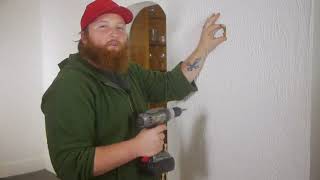
How to hang a mirror or picture on a FRAGILE wall, by Old house DIY on YouTube. 5 min 47 s.
- Video length
- 5 min 47 s
- Time to do it
- 30 minutes
- Difficulty
- Medium
- Steps
- 7
What you need
Steps
Tap along the wall where the mirror will go. A hollow, drummy sound means the plaster has pulled away from the wall behind it, so pick a firmer spot or plan for longer fixings.
Decide the height, usually eye level at the centre of the mirror, and mark the centre line on the wall with a pencil and a strip of masking tape.
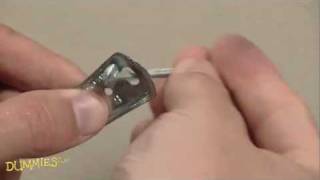
Screw mirror plates or D-rings to the frame itself, not to the thin backing board. Fit two, spaced well apart, so the weight is shared.
Pick fixings long enough to pass through the plaster and grip the solid stone or brick behind it. Short plugs that only hold the crumbly top coat will pull out.
Drill with a masonry bit at slow speed, hammer action off, until you are through the plaster, then switch the hammer on for stone. Wear eye protection.
Brush or blow the dust out of each hole and ease the plug in gently. Never hammer a plug into old lime plaster, because it will crack.
Drive the screws in, leaving the heads proud enough for the plates to hook over. Ask a helper to lift the mirror on, then check it with a spirit level.
Tips and common mistakes
Drill one small test hole in a hidden spot first to see how thick the plaster is and what sits behind it.
Skip adhesive strips and hooks on lime plaster and old paint, as they often pull the surface off when removed.
Keep screws slightly loose until the mirror is hooked on, then tighten so the frame sits flat against the wall.
Questions
Can I hang a heavy mirror on lath and plaster?
Yes, but the fixings must reach the timber studs or the masonry behind the plaster. Aim for two studs, or use long masonry screws if the wall is solid.
Why does the plaster crumble when I drill?
Old lime plaster is soft and often loose from its backing. Drill slowly with the hammer action off through the plaster and let the bit cut rather than bang.
Will adhesive hooks hold a mirror?
Only for very small, light frames on sound paint. On old or friable plaster they usually fail and take the surface with them.
This guide was drafted from the video's details and general task knowledge. It has not been checked against the full video. Check the video and relevant product instructions before following a procedure. Report a correction.