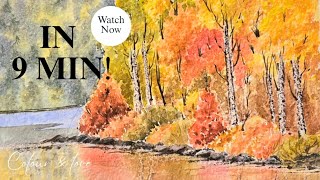
WOW! 🍁 3-Step Watercolor Leaf Trick Anyone Can Do!, by Liesl's Artistic Studio: Watercolor on YouTube. 19 min 54 s.
- Video length
- 19 min 54 s
- Time to do it
- 30 minutes
- Difficulty
- Easy
- Steps
- 8
What you need
Steps
Tape your watercolor paper to a board so it stays flat while it dries. Keep the sheet at a slight angle so paint runs gently downward.
Mix a warm orange in a palette well using Cadmium Red and Gamboge. Add a touch of Ultramarine Blue for a deeper, browner autumn tone.
Wet the leaf shape on the paper with clean water only. Keep the water even and stop at the leaf edge so the shape stays crisp.
Drop orange mix into the wet area and let it spread on its own. Tilt the board slightly to move the color toward the leaf tip.
Add Alizarin Crimson and a little Payne's Gray into the wet paint for darker veins and shadow. Let the colors blend without scrubbing.
Use a #6 round brush to pull small points at the leaf edges while the paper is still damp. Wipe the brush on a cloth if it gets too wet.
Let the leaf dry fully. Then use the #1 rigger brush with Burnt Umber to paint thin veins from the stem outward.
Add a soft shadow under the leaf with diluted Payne's Gray. Keep it light and let it fade at the edges.
Tips and common mistakes
If the paint stops spreading, the paper has dried. Rewet the area with clean water before adding more color.
Too much water makes muddy puddles. Blot the brush on a cloth before touching the paper.
Test your mixed colors on scrap paper first so you know how strong they look dry.
Masking fluid can protect a white stem or highlight, but let it dry fully before painting over it.
Questions
Do I need to draw the leaf first?
No. You can paint the leaf shape freehand with water, or sketch a light outline with a pencil and erase it later. A simple outline helps beginners keep the shape.
Which colors make a good autumn leaf mix?
Cadmium Red with Gamboge gives orange, Alizarin Crimson adds deep red, and a little Ultramarine Blue or Payne's Gray makes earthy brown shadows.
Can I use pan paints instead of tubes?
Yes. Load a wet brush into the pan and mix on your palette the same way. Tube paints are just easier to get strong, creamy mixes.
This guide was drafted from the video's details and general task knowledge. It has not been checked against the full video. Check the video and relevant product instructions before following a procedure. Report a correction.