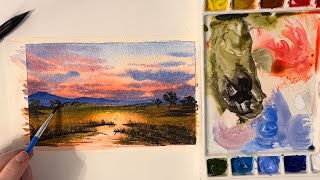
I Blended the Colors… and an Autumn Forest Appeared | Autumn Watercolor Landscape Tutorial, by Dream Painting studio on YouTube. 5 min 55 s.
- Video length
- 5 min 55 s
- Time to do it
- 30 minutes
- Difficulty
- Easy
- Steps
- 9
What you need
Steps
Fill a jar with clean water and lay out your paints, liner brush, round brushes in size 3 and 5, and heavyweight paper taped flat to a board.
Wet the top half of the paper with clean water using a large round brush. It should shine evenly but have no standing puddles.
Load a round brush with violet or purple and touch it to the wet paper. Let the color spread on its own instead of brushing it around.
Drop gold and warm yellow beside the purple. Tilt the board gently so the edges bleed into a soft glow, then set it back down.
Stop blending while the paper is still damp. Keep the shapes loose so the trees and light can appear later.
Wait until the paper is damp rather than soaking, then paint trunks and thin branches with the liner brush in a darker mix.
Tap clusters of orange, red and yellow foliage with the size 3 and 5 round brushes, varying the size of each cluster.
Paint a quiet blue stream across the lower area with long, light strokes, leaving pale gaps of paper for the light on the water.
Let the painting dry flat. Once it is fully dry, add a few darker shapes in the foreground to give the scene depth.
Tips and common mistakes
Keep a scrap of the same paper nearby to test color strength before you touch the painting.
Overworking wet paint turns purple and yellow into grey, so blend less than you think you need.
Leave small gaps of bare paper for highlights instead of adding white paint at the end.
Let each layer dry fully before adding darker shapes, or the new paint will lift the old color.
Questions
Do I need to sketch the scene first?
No. The scene is built from color, so you start straight on damp paper and let the shapes appear as you go. If you want more control, a light pencil outline of the treeline is fine.
What paper works best for this?
Use heavyweight watercolor paper of 140 lb / 300 gsm or thicker. Thin paper buckles under all the water and makes the washes pool in the wrong places.
Can I use student-grade paints?
Yes, student-grade watercolors work for a loose scene like this. Artist-grade paints spread further and stay brighter, but they are not required.
This guide was drafted from the video's details and general task knowledge. It has not been checked against the full video. Check the video and relevant product instructions before following a procedure. Report a correction.