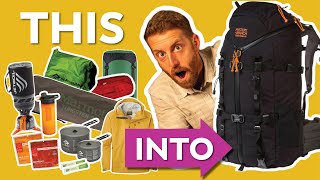
Pack your backpack so it carries well on long hikes. You will learn where the sleeping bag, water bladder, cookset, tent and small items go, and how to keep weight close to your back. It suits day hikers and multi-day campers with any size of pack.
YouTube video: HOW TO PACK A BACKPACK OR HOW I PACK MY BACKPACK | EXPERT ADVICE
Caption availability is unknown. Check the CC control in the YouTube player.
Other videos for this task
- How to pack a hiking backpack for comfort and balance 9:39 · 8 written steps
Choose a chapter (20)
- Video length
- 19 min 57 s
- Time to do it
- 15 minutes
- Difficulty
- Easy
- Steps
- 9
What you need
Steps
Lay everything out and sort it into groups: sleep system, cookset, clothing, tent and small items. Decide what you truly need before anything goes in the pack.
Put your sleeping bag in a waterproof dry sack and push it into the bottom of the main compartment. It is light and bulky, so it belongs low and out of the way.
Fill the water bladder and slide it into its sleeve against your back. Keep heavy items like food and the cookset in the middle of the pack, close to your spine.
Pack clothing in a dry bag and press it around the heavy middle section. This fills gaps and stops gear shifting as you walk.
Wrap your cookset in a cloth or stuff sack so it does not rattle or damage other gear. Place it in the middle area with the rest of the heavy items.
Pack the tent body in the main compartment and strap the poles to the outside of the pack. Keep the pegs in a small bag so they cannot poke through the fabric.
Fill the leftover space with light items like a hat and gloves, then close and tighten the main compartment straps. The load should feel firm, not loose.
Stash your rain jacket, water bottles and knife in the outside pockets and side straps. You want them within reach without opening the main bag.
Use the top lid for gloves, a hat and a first aid kit. Put trekking poles on the outside straps when you are not carrying them.
Tips and common mistakes
Keep the heaviest gear at the middle of your back, not at the very bottom or top, so you stay balanced.
Use dry bags for the sleeping bag and clothing even in good weather, since rain can soak through a pack.
Put pegs in a separate pouch so they do not tear the tent or other gear.
Lift with your legs when you swing a loaded pack onto your back to protect your lower back.
Questions
Where should the heaviest items go in a backpack?
Close to the middle of your back, around shoulder-blade height. That keeps the load stable and takes strain off your shoulders.
Does this packing method work for a small daypack?
Yes. The same rules apply to any size of pack: heavy gear in the middle, light bulky gear low, and small items in the lid and outer pockets.
Should I put the tent inside or outside the pack?
Check the instructions for your exact model before choosing this setting or amount. Strap the poles to the outside so they do not bend or poke other gear.
The notes are drafted automatically from video details and general task knowledge. How the guide was prepared
Report a correction