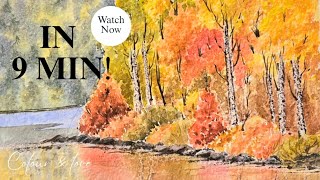
The only 3 tips you need for mastering color theory in watercolor, by Kristin Van Leuven on YouTube. 10 min 57 s.
- Video length
- 10 min 57 s
- Time to do it
- 20 minutes
- Difficulty
- Easy
- Steps
- 7
What you need
Steps
Squeeze a small amount of each primary paint onto your palette. Keep warm and cool versions of red, yellow and blue separate, for example cadmium red deep next to opera rose.
Learn the colour wheel order: red, orange, yellow, green, blue, violet. Mix two primaries side by side to see which pair gives a clean secondary and which turns muddy.
Mix a secondary colour by adding the stronger paint a little at a time to the weaker one. Stop as soon as you reach the hue you want.
Test warm versus cool mixes. A warm red with a warm yellow gives a bright orange, while a cool red with a cool yellow gives a duller orange.
Make a tertiary colour by mixing a primary with the secondary next to it, such as blue with green for blue-green. Keep notes of the ratios you used.
Paint small swatches of every mix on watercolour paper and label them. Let them dry, because watercolour looks lighter once dry.
Rinse your brush in clean water between mixes and blot it on the paper towel. Dirty water is the fastest way to muddy colours.
Tips and common mistakes
Always mix with a clean brush and fresh water, and change the water when it looks cloudy.
Add dark paint to light paint, not the other way round, so you do not waste a whole puddle.
Test mixes on scrap paper first, since watercolour dries several shades lighter than it looks wet.
Keep a swatch sheet of your own mixes so you can repeat a colour later.
Questions
Why do my watercolour mixes look muddy?
You are probably mixing all three primaries or using dirty water. Rinse the brush, use clean water and mix only two colours at a time.
Do I need expensive paints to learn colour theory?
No. Student grade pans such as Cotman or Daler Rowney work fine for mixing practice. Save artist grade paint for finished pieces.
How many colours should a beginner palette have?
A warm and cool version of each primary is enough, so six paints. You can mix most other colours from those.
This guide was drafted from the video's details and general task knowledge. It has not been checked against the full video. Check the video and relevant product instructions before following a procedure. Report a correction.