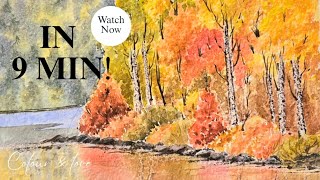
13 Essential Tips for Mixing Watercolours Like a Pro, by Louise De Masi on YouTube. 20 min 7 s.
- Video length
- 20 min 7 s
- Time to do it
- 20 minutes
- Difficulty
- Easy
- Steps
- 8
What you need
Steps
Fill two jars with clean water, one for rinsing your brush and one for clean water. Put a small amount of each colour into separate palette wells and keep a paper towel handy.
Load your brush with the lighter colour and paint it into an empty well. Pick up a little of the darker colour on the brush tip and stir it in slowly, checking the colour as you go.
Brush a small swatch onto a scrap of the same watercolour paper and let it dry. Watercolour looks lighter and duller when dry, so judge the mix only after it has dried.
Keep the ratio steady by counting brush loads or drops of water. If you use two loads of yellow and one of blue, write it down so you can repeat the same green later.
Rinse the brush well between colours and use a separate well for each new mix. Dirty water or a stained brush turns clean mixes muddy.
To lighten a mix, add water rather than more paint. To deepen it, pick up more pigment on the brush and stir it through.
Tone down a colour that is too bright by adding a tiny amount of its complementary colour, the one opposite it on the colour wheel. Add it in pinpricks, because a little goes a long way.
Mix a larger batch in a spare well for big washes so the colour stays even across the paper. Seal any leftover mix in an airtight palette and test it before using it again.
Tips and common mistakes
Hard tap water can shift colours, so use distilled or filtered water if your mixes look chalky.
Stick to two or three pigments in one mix, because more than that quickly turns muddy.
Paint a chart of your own mixes and label each one so you can match a colour again later.
Wipe the brush on the rim of the water jar rather than the palette to keep your wells clean.
Questions
Why does my mixed colour look different on the paper?
Watercolour dries lighter and less saturated than it looks when wet. Always judge a mix from a dried swatch on the same paper you are painting on.
How much water should I add to the paint?
Start with a damp brush and a small puddle of paint, then add water a drop at a time. More water gives a pale, transparent wash, while less water gives a strong, opaque colour.
Can I save a mixed colour for later?
Yes. Keep it in a sealed palette with a damp sponge so it does not dry out completely. Stir it and test a swatch before you use it, since the colour may shift slightly.
This guide was drafted from the video's details and general task knowledge. It has not been checked against the full video. Check the video and relevant product instructions before following a procedure. Report a correction.